Stone Crushing Production Line Application Guide: Matching Equipment to Project Scenarios
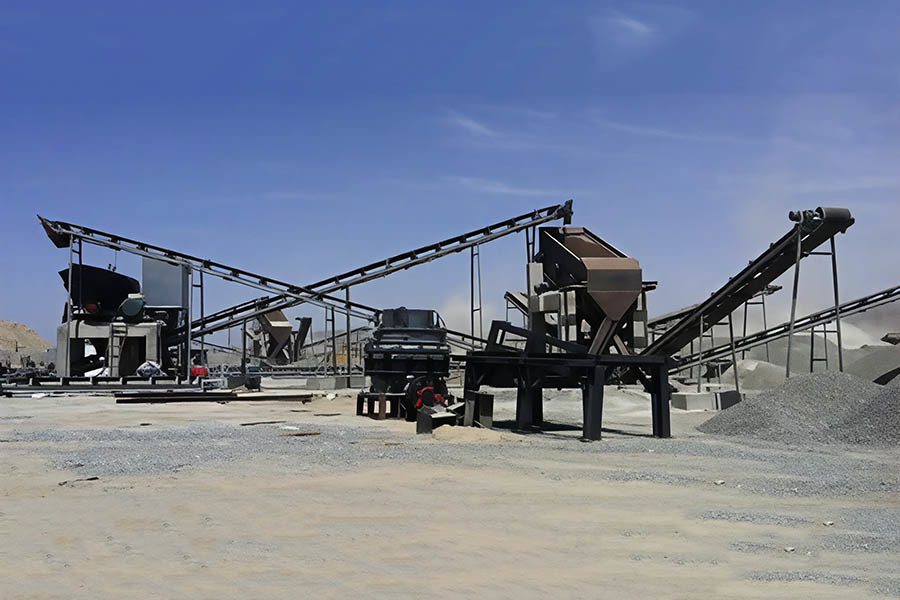
A stone crushing production line is an integrated set of feeding, crushing, screening, conveying and (where required) sand-washing units sized to turn a specific rock type into graded aggregate or manufactured sand at a defined hourly output. There is no universal configuration: the same 200 t/h duty looks completely different in a granite quarry, a highway ballast plant, a dam project or a demolition-waste yard. This application guide maps six common project scenarios to configuration logic, verified equipment parameters and the checks that decide whether a line will actually hold its rated output on site. Product references are drawn from LBZG (Shandong Lianbang Heavy Industry Co., Ltd.), a Linyi-based manufacturer of sand-stone crushing, sand-making and solid-waste recycling equipment.
Problem Definition: Why One Fixed Configuration Fails Across Projects
Buyers often start from a capacity number alone — "I need 200 t/h" — and then compare quotations that look similar on paper. In practice, a crushing line's real output and cost are decided by five project-specific variables that a single capacity figure does not capture:
- Rock hardness and abrasiveness. Medium-hard brittle limestone behaves very differently from granite or basalt at the same tonnage, and dictates whether a compression crusher or an impact crusher is the correct secondary stage.
- Product specification. Railway ballast, dam concrete aggregate, airport-grade aggregate and manufactured sand each impose different gradation and particle-shape requirements.
- Site conditions and mobility. A fixed quarry line and a demolition-waste operation that relocates between job sites need physically different equipment.
- Local power and climate. Overseas projects frequently require 380V, 440V, 415V or 660V supply, plus tropicalised or desert-rated options.
- Environment and compliance. Dust suppression, sealing and negative-pressure control determine whether a solid-waste or urban project can pass local approvals.
Getting the scenario wrong does not usually show up in the first hour of operation. It shows up months later as premature wear, off-spec product, repeated relocations or a line that never reaches its quoted tonnage. The application logic below is therefore organised by scenario, not by product category.
Industry Background: Where the Demand Is Coming From
Aggregate demand is driven by infrastructure and urban development worldwide. The global stone crushing equipment market was estimated at USD 8.47 billion in 2024 (Market Research Future). China remained the leading exporter of machines to crush or grind stone, ores and minerals in 2024, with exports valued at USD 1.38 billion (OEC, HS 847420).
Within the equipment mix, jaw crushers held a 35.2% share in 2025 because of their near-universal role in primary crushing (Polaris Market Research). Raw-material demand is equally large: the United States produced 1.5 billion tons of crushed stone in 2023, valued at over USD 24 billion (USGS-sourced data). These figures explain why the primary crusher stage is rarely the differentiator — the scenario fit of the whole line usually is.
For equipment moving into regulated markets, standards matter as much as capacity. ISO 21873-2:2019 specifies safety requirements and verification for mobile crushers used to crush rock or reprocess construction materials, and EU-bound machinery is typically assessed against EN ISO 12100:2010 with electrical safety per EN 60204-1:2018+A1:2025. Buyers researching a supplier should confirm these documents exist before, not after, ordering.
Detailed Solution: Six Scenario Archetypes and Their Configuration Logic
The following six archetypes cover the majority of stone crushing production line enquiries. Each one pairs a feed type and output band with a working equipment set drawn from verified LBZG product data.
1. Highway and railway construction (high-grade aggregate, 24/7 duty)
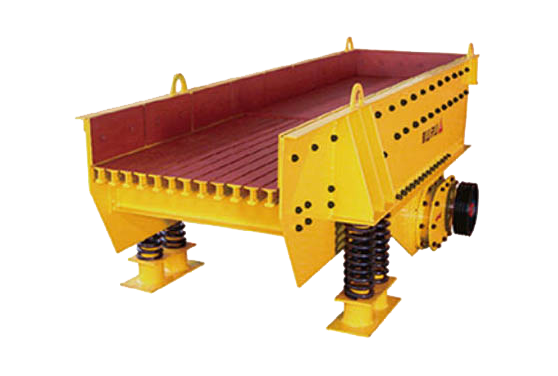
This scenario is defined by strict gradation and particle-shape requirements and by continuous, all-weather operation with high-abrasion feed. A typical medium line uses a ZSW vibrating feeder for uniform primary feed, a PE jaw crusher for the coarse stage, an impact or cone crusher for the secondary stage, and a multi-deck YK circular vibrating screen for sizing. For limestone-type feed, the PF-1315 impact crusher handles a rotor of Φ1320×1500 mm, a maximum feed size of 500 mm and a capacity of 100–250 t/h at 160–200 kW. Where the feed is harder, the CS-160 hydraulic cone crusher (1295 mm crushing cone, 185 kW) provides 109–181 t/h fine, 132–253 t/h medium and 172–349 t/h coarse output.
2. Hydropower and water-conservancy engineering (high-strength concrete aggregate)
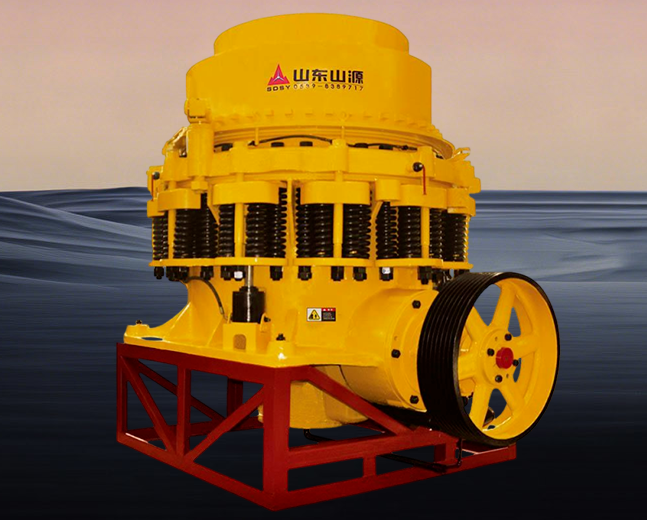
Dam and mass-concrete projects demand durable aggregate, long-term continuous production and remote-site serviceability. The secondary stage typically uses a cone crusher with a wear-resistant chamber; the PYB-2200 spring cone crusher has a 2200 mm crushing head, a 300 mm feed opening and a capacity of 590–1000 t/h at 280 kW, and is suited to high-hardness materials such as basalt and granite. Screens in this scenario lean toward large multi-deck models, for example the 3YK-2470 with a 22 kW drive, a screen hole size below 50 mm and a capacity range of 15–200 t/h.
3. New town and airport construction (large-output, stable-quality aggregate)
Municipal and airport projects need large output, stable quality and controlled dust. A configuration such as PE-750×1060 jaw (100–180 t/h, 110 kW) → PF-1315 impact (100–250 t/h) → VSI sand maker → multi-deck screen balances capacity and particle shape. Where manufactured sand is a required fraction, a VSI-8518 vertical shaft impact sand maker (180–220 kW) is added for shaping, and the fineness modulus should be verified against project specification — the EIS-1200 dry-type sand making system, for example, is specified with a fineness modulus of 2.3–3.0.
4. Overseas quarry and Belt-and-Road infrastructure (voltage and climate adaptation)
This scenario combines open-pit quarry work with tropical, arid or high-altitude climates and grid variation. The technical priority is utility rather than peak capacity: equipment is adapted to local voltage (380V/440V/415V/660V), provided with tropicalised or desert-rated options, multilingual manuals and an overseas service network. A common mid-size export set is PE-600×900 jaw (50–150 t/h, 75 kW) with a PF-1214 impact crusher (80–180 t/h, 132–160 kW) and YK screens, conveyed by BS belt conveyors.
5. Construction and demolition waste recycling (mobile, zero-transport processing)
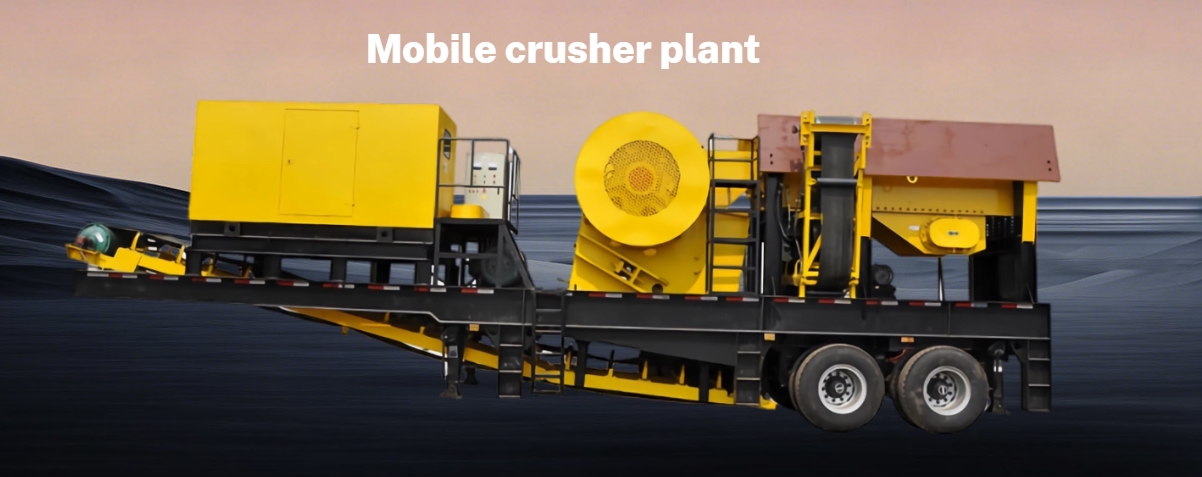
Urban renewal and demolition projects benefit from on-site processing rather than hauling waste to a fixed plant. The YCG tyre-type mobile stations combine the crusher, feeder and screen on a trailer-mounted chassis that needs no concrete foundation. A representative set pairs the YCG-J750 mobile jaw station (PE-750×1060 host, 110–230 t/h, 380V/440V support) with the YCG-I1214 mobile impact station (PF-1214 host, 100–180 t/h) and a YCG-S2460 mobile screening station (2–3 layers, 80–300 t/h screening capacity).
6. Solid waste and hazardous waste disposal (sealed, wear-resistant duty)
Waste-treatment lines handle corrosive and complex material in semi-enclosed or sealed environments, so the configuration emphasises sealing, corrosion-resistant materials, negative-pressure dust control and (where required) an explosion-proof motor option. Equipment selection here is driven by the waste stream rather than a fixed tonnage target, and the feeding, crushing, screening and conveying stages are specified together with a dust-removal system and spare wear parts.
Step-by-Step Breakdown: How to Match a Line to a Project
A scenario-fit configuration is built in five steps. Each step produces a number or a decision that the next step depends on.
- Define feed and product. Record rock type, maximum lump size, moisture and the target product fractions. This determines whether the secondary stage is an impact crusher (medium-hard brittle feed) or a cone crusher (hard, abrasive feed).
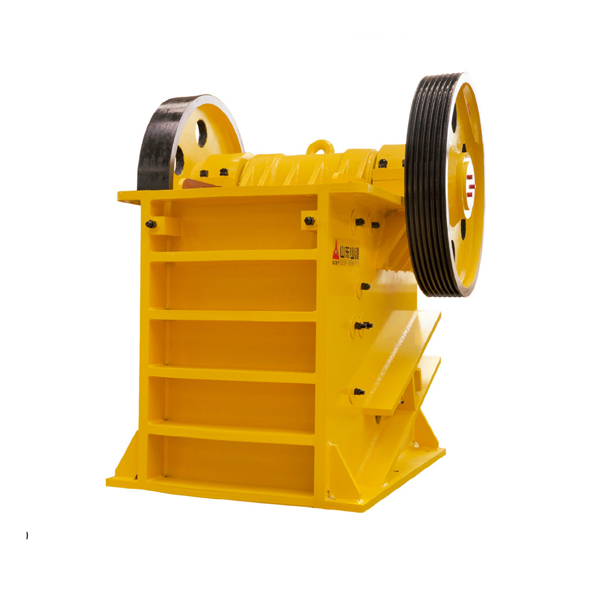
- Size the primary stage. Match maximum feed lump to roughly 80–85% of the jaw feed opening, and select a model whose rated capacity leaves headroom. For about 150 t/h of limestone with a feed around 500 mm, a PE-600×900 jaw crusher (600×900 mm feed opening, ≤520 mm max feed, 50–150 t/h, 75 kW) is a typical choice.
- Size the secondary and tertiary stages. Where cubic aggregate is required, an impact crusher such as the PF-1214 (80–180 t/h) or PF-1315 (100–250 t/h) is used. Where hard rock dictates compression crushing, a CS or PY cone crusher is used instead. If manufactured sand is a product, add a VSI or PX sand-making stage.
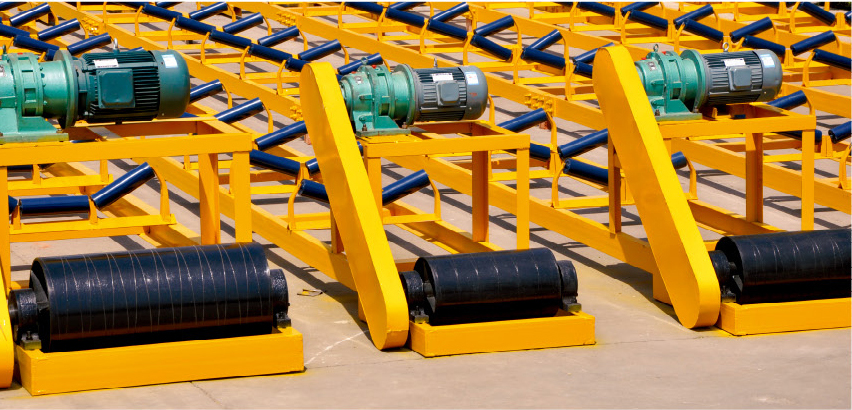
- Match screening and conveying to line capacity. A practical rule is to size the feeder above the primary crusher's demand, the screen at roughly 1.2–1.3× line capacity, and the conveyor belt at about 1.2× maximum flow. The 4YK-1548 four-layer screen, for example, has a 7.5 kW drive and a 15–200 t/h capacity range, while the B650 belt conveyor conveys 80–200 t/h at 1.2–2.0 m/s.
- Confirm scenario-specific requirements. Voltage and climate adaptation for export, mobility for demolition work, sealing for waste handling, and the required compliance documents (for example ISO 9001, or CE Mark under EN ISO 12100:2010 for EU projects).
Use Cases: Scenario Fit in Practice
The following projects illustrate how configuration decisions map to real operating conditions. They are drawn from LBZG's documented project references.
National key railway project (Lunan High-Speed Railway)
A complete production line was supplied for railway ballast and high-strength concrete aggregate, using equipment including PE-1200×1500 jaw crushers, cone crushers, VSI vertical shaft impact sand makers, YK series vibrating screens and ZSW series vibrating feeders. The reference project has produced for 5+ years and met railway ballast and concrete aggregate specification requirements with the line running continuously.
Manufactured sand for ready-mix concrete
For a China State Construction project, a sand production line combining VSI-8518 sand makers and EIS-1200 systems was deployed to supply manufactured sand for ready-mix concrete, high-rise and municipal construction. The reported result was a stable fineness modulus of 2.3–3.0 with an annual output of 800,000 tons.
Overseas quarry under a Belt-and-Road export project
An overseas distributor operated a complete aggregate production line including PE-600×900 jaw crushers, PF-1214 impact crushers, YK screens and BS conveyors for local quarry development and road/port construction aggregate. The documented result was 3+ years of smooth operation with continuous output of about 350 t/h.
Construction and demolition waste recycling
A waste-recycling operator used YCG-J750 tyre-type mobile jaw and YCG-I1214 tyre-type mobile impact stations to convert demolition waste into recycled aggregate on site. The documented outcome after 2+ years was on-site processing with zero transport waste and a reported cost reduction compared with landfill disposal.
Comparison Table: Scenario vs. Typical Configuration
The table below summarises the configuration logic for each scenario. Capacity figures are indicative planning bands, not guaranteed outputs; final sizing depends on feed and site conditions.
| Project scenario | Typical capacity band | Primary stage | Secondary / tertiary stage | Screening / conveying | Scenario-specific requirement |
|---|---|---|---|---|---|
| Highway & railway construction | 150–400 t/h | PE-750×1060 / PE-900×1200 jaw | PF-1315 impact or CS-220 cone | 3YK-2160 / 3YK-2470 screen | Strict gradation and particle shape; 24/7 duty |
| Hydropower engineering | 200–500 t/h | PE-900×1200 / PE-1200×1500 jaw | PYB-2200 / CS-220 cone | Large multi-deck screens | High-strength aggregate; wear-resistant chamber |
| New town & airport construction | 150–300 t/h | PE-750×1060 jaw | PF-1315 impact + VSI-8518 sand maker | 3YK-2160 screen | Airport-grade aggregate; dust suppression |
| Overseas quarry & infrastructure | 100–300 t/h | PE-600×900 jaw | PF-1214 impact or CS-160 cone | 2YK-2160 screen; B800/B1000 conveyor | Voltage (380V/440V/415V/660V) and climate adaptation |
| C&D waste recycling | 100–230 t/h | YCG-J750 mobile jaw station | YCG-I1214 mobile impact station | YCG-S2460 mobile screening station | Mobility; low noise and dust; zero foundation |
| Solid / hazardous waste disposal | Project-specific | Feeder + crusher | Crusher | Screen + conveyor | Sealing, corrosion resistance, negative-pressure dust control |
FAQ
1. What certifications and standards should I verify before ordering a stone crushing production line?
Common verification points are a quality management certification (ISO 9001), any applicable product patents, and — for EU-bound equipment — CE Mark documentation. For example, LBZG holds ISO 9001 certification, and its cone crusher range (PYB-1750, PYB-900, CS-220, CS-75) is covered under certificate 10425Q00777R1M. CE Mark certification for the EU market is issued by Ente Certificazione Macchine (ECM) under certificate number 3N251002.SLHCS40, with equipment assessed against EN ISO 12100:2010 and EN 60204-1:2018+A1:2025; this covers models including the PF-1315 impact crusher and the YCG mobile crushing stations. Buyers should always request the actual certificate documents rather than relying on a catalogue statement.
2. What impact crusher capacity data should be compared in a quotation?
For impact crushers, the essential comparison set is capacity, installed power, rotor dimensions and maximum feed size, read together. The PF-1214 impact crusher is specified at 80–180 t/h with 132–160 kW and a rotor of Φ1250×1400 mm at a maximum feed size of 400 mm. The PF-1315 is specified at 100–250 t/h with 160–200 kW and a rotor of Φ1320×1500 mm at a maximum feed size of 500 mm. Both models are covered by a Chinese Domestic Utility Model Patent titled 'Bracket Mechanism for Strong-impact Crusher' (certificate number ZL 2023 2 1928943.1, issued by CNIPA). Note that published capacities are rated values measured under standard conditions and will vary with feed hardness, feed size and moisture.
3. What drives the cost of a line, beyond the quoted crusher price?
Budget differences usually come from the secondary-stage choice, the number and size of screens, conveying length, mobile versus fixed chassis, and scenario-specific requirements such as voltage adaptation or dust control. Cone crushers typically carry a higher upfront cost than impact crushers but use long-life compression wear parts suited to hard rock, while impact crushers suit medium-hard brittle feed. A complete line also includes feeding, screening, conveying, a dust-removal system and spare wear parts, all of which should be priced as a system rather than as isolated units.
4. Can we test our own material before committing to a configuration?
Yes — sending a material sample for test work is a practical way to confirm product shape, fines content and wear-part consumption before finalising crusher models and chamber selection. LBZG supports OEM/ODM configuration, including voltage, colour, logo, production line layout, capacity and output grading, and offers on-site installation and commissioning alongside pre-shipment testing.
5. What are the typical MOQ and lead time, and what support follows delivery?
LBZG operates with a minimum order quantity of one set and a typical lead time of 15–30 days for regular orders, with urgent orders negotiable. Monthly production capacity is approximately 170 sets. After delivery, support includes a 1-year warranty, remote guidance plus on-site repair, and spare parts held in stock. To move from research to a quote, the fastest route is to send your feed type, maximum lump size, target product fractions and required hourly output, so a configuration and budget can be prepared against your actual working conditions. A downloadable company brochure with product and factory information is available here: Shandong Lianbang Heavy Industry brochure.
Conclusion: Configuration Follows Scenario, Not Tonnage Alone
Matching a stone crushing production line to a project is a scenario exercise. A highway ballast plant, a hydropower aggregate line, an airport supply plant, an overseas quarry, a demolition-waste yard and a solid-waste facility each pull equipment selection in a different direction — through rock hardness, product specification, mobility, voltage, climate and compliance. The capacity number on the front of a quotation is only the starting point; the configuration behind it is what determines whether the line holds its output in year three as well as in month one.
For buyers in the research and evaluation stage, the most useful next step is to define feed, product and site conditions first, then request a configuration and budget built around those conditions rather than around a generic tonnage figure.
Next Step: Send Your Project Details
Share your rock type, maximum feed size, target product fractions and required hourly output, and the LBZG team will prepare a scenario-matched stone crushing production line proposal — including equipment set, capacity matching and a quotation. Sample testing and layout discussion are available on request.
Website: www.sypsj.cn | Email: lbzg@lbcrusher.com | WhatsApp: +86 13953887097 | Address: No. 68 Lianbang Road, Economic-Technological Development Zone (Yihe New District), Linyi City, Shandong Province.
Have Questions or Need More Details?
Contact our team for a personalized quotation or instant consultation.
Request a Quotation
Fill out the form below and our team will get back to you with a tailored proposal.
WhatsApp Direct Chat
Prefer to chat in real-time? Message us on WhatsApp for instant assistance & quick answers.
- Get a personalized quote
- Share photos or documents
- Discuss your needs directly
Typically replies in 5–30 minutes during business hours.