Stone Crushing Production Line Manufacturer: LBZG Analysis
Stone Crushing Production Line Manufacturer Analysis: LBZG (Shandong Lianbang Heavy Industry)
A stone crushing production line manufacturer is judged less by the machines it lists and more by whether the complete circuit - feeding, primary crushing, secondary and tertiary crushing, screening, conveying, and where required sand making and washing - holds its rated output under real site conditions, with export-ready documentation. LBZG, the brand trademark of Shandong Lianbang Heavy Industry Co., Ltd., is a crushing equipment manufacturer based in Linyi, Shandong Province, China, that supplies standalone machines, complete stationary sand-stone crushing lines, EPC general contracting and tyre-type mobile crushing stations.
Problem Definition: What Buyers Actually Need From a Stone Crushing Production Line Manufacturer
A stone crushing production line is an integrated system, not a single machine. A typical circuit contains a vibrating feeder with pre-screening duty, a primary jaw crusher, a secondary crusher (cone, impact or hammer type), one or more circular vibrating screens, belt conveyors and - depending on the target product - a tertiary sand-making unit, sand washers and a dust-removal system. The output of that circuit is set by the weakest unit in the chain, not by the crusher carrying the largest nameplate figure.
Three failure patterns recur in procurement, and they define what a buyer at the awareness and research stage should actually evaluate.
- Buying a machine instead of a process. A buyer selects a jaw crusher by feed opening, then discovers that the secondary stage cannot absorb the primary output. The jaw runs at partial load, the screen recirculates more material than designed, and the cost per ton rises.
- Confusing rated capacity with actual capacity. Published capacity figures are measured under ideal feed size, hardness and moisture. Site throughput is normally lower, and that gap is what breaks a project's economics rather than the purchase price itself.
- Leaving documentation and compliance to the end. On export projects, equipment that arrives without CE conformity documentation, English manuals, drawings, spare-parts lists and inspection records can stall at customs or at local project acceptance.
The practical question is therefore not which crusher is cheapest, but which manufacturer can specify, build, document and support the whole circuit - and can show verifiable evidence of having done so before.
Industry Background: How the Crushing Equipment Category Looks in 2026
Four published data points frame the category.
- The global stone crushing equipment market was estimated at USD 8.47 billion in 2024 (Market Research Future, Stone Crushing Equipment Market report).
- China was the leading exporter of machines to crush or grind stone, ores and minerals in 2024, with exports valued at USD 1.38 billion under HS code 847420 (Observatory of Economic Complexity).
- Jaw crushers held a 35.2% share of the crusher market in 2025, reflecting their position as the default primary crushing machine (Polaris Market Research).
- Demand is anchored by aggregate consumption: the United States produced 1.5 billion tons of crushed stone in 2023, valued at over USD 24 billion (USGS data cited by Research Nester).
Two structural effects follow from these numbers. First, because the primary stage dominates unit volume, competition among stone crushing production line manufacturers concentrates on jaw crusher design, wear-part life and the ability to feed downstream stages evenly. Second, mobile crushing is now treated as its own safety category: ISO 21873-2:2019 specifies safety requirements and verification for mobile crushers used to crush rock or reprocess construction materials. That raises the documentation bar for any supplier that offers mobile stations alongside fixed lines.
Company Overview: Shandong Lianbang Heavy Industry (LBZG)
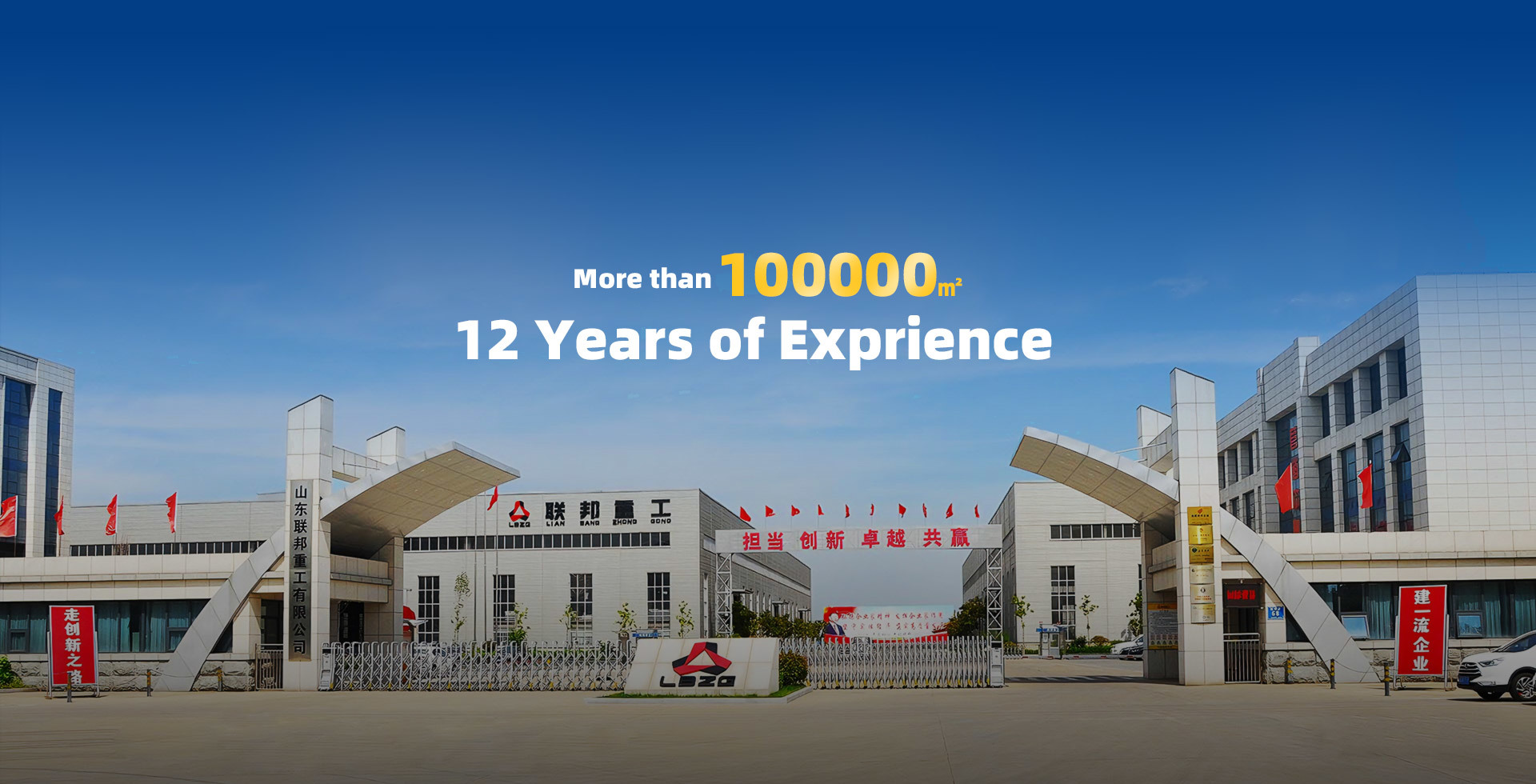
Shandong Lianbang Heavy Industry Co., Ltd. was registered in 2013 and is headquartered at No. 68 Lianbang Road, Yihe New Area (Economic and Technological Development Zone), Linyi, Shandong Province, China. Its technical origins can be traced back to Chengming Machinery, an affiliated enterprise established in 1996, so the operating team's experience in crushing equipment predates the 2013 registration by more than a decade. Registered capital is 50 million Yuan, and the company's brand trademark is Shanyuan LBZG.
The company positions itself as a high-tech, provincial-level "Specialized, Refined, Differential & Innovative" manufacturing enterprise that integrates R&D, manufacturing, complete-set EPC solutions and overseas engineering services for sand-stone crushing, sand-making and solid waste recycling equipment.
LBZG at a glance (company-published figures)
- Registered: 2013; technical origins traceable to Chengming Machinery (1996)
- Headquarters: Linyi, Shandong Province, China
- Production bases: two, covering 120,000 m² in total, with 40,000 m² of standard workshops
- Processing equipment: more than 150 sets
- Workforce: about 110 on-the-job employees, including over 40 R&D personnel
- Registered capital: 50 million Yuan
- Annual output: 2,000 units
- Export ratio: 30%; products sold across all Chinese provinces and more than 40 overseas countries
- Business modes: standalone equipment sales, EPC general contracting for complete sand-stone lines, construction waste and solid-waste treatment solutions, and mobile crushing and screening equipment
Markets served
LBZG's declared export markets are concentrated in four regions: the Middle East (Saudi Arabia, the United Arab Emirates, Iraq, Qatar); Central Asia (Russia, Kazakhstan, Uzbekistan); Southeast Asia (Indonesia, Malaysia, Vietnam, the Philippines); and infrastructure-focused African countries including Nigeria, Kenya and Ghana. Domestically, the company states that it provides services for infrastructure projects of central enterprises such as China Railway, China State Construction, China Communications Construction and Gezhouba Group.
Core Products and Solutions
LBZG's product range covers every stage of a stone crushing production line, from feeding to washing, plus mobile variants of the main crushing stages. The catalogue is organised by crushing stage rather than by a single flagship model.
Primary crushing: PE and PEX jaw crushers
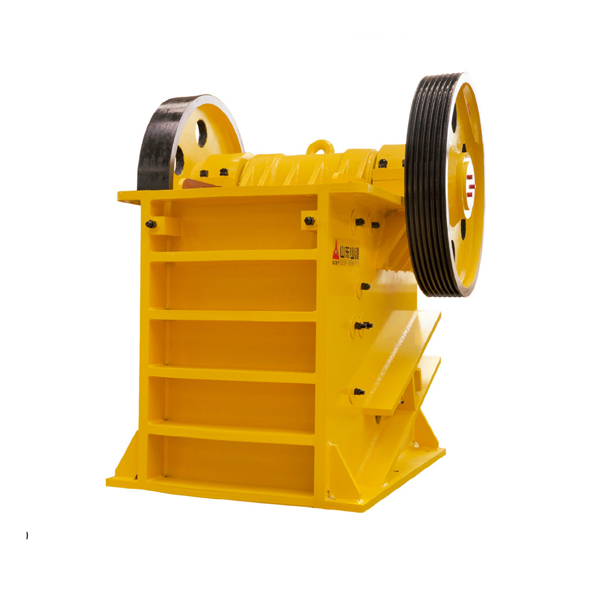
The PE series is the primary jaw line, running from the compact PE-250×400 up to the PE-1200×1500, which is published with a 1200×1500 mm feed opening, a maximum feed size of 1,000 mm, an output range of 150-350 mm, a 200 kW motor and a 109 t operating weight. Mid-range models such as the PE-600×900 (600×900 mm feed opening, 50-150 t/h, 75 kW) cover medium quarries and infrastructure work. The PEX series handles secondary and tertiary fine crushing, for example the PEX-150×750 with a 150×750 mm feed opening, 120 mm maximum feed and an 18-48 mm discharge adjustment range.
Secondary and tertiary crushing: cone, impact, hammer and roller
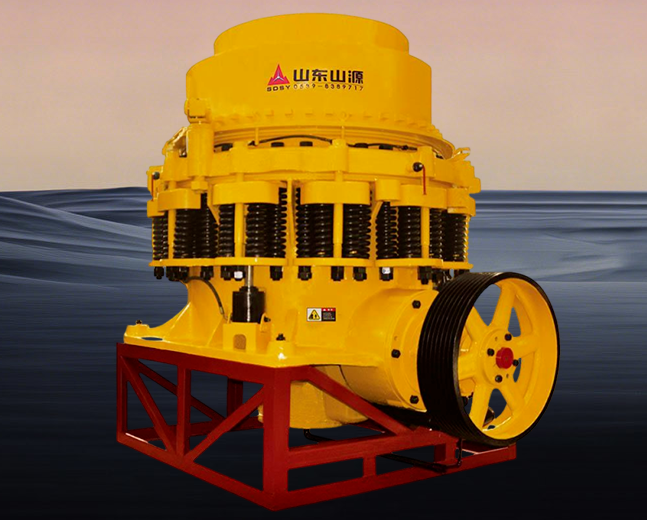
For hard and abrasive rock, the CS hydraulic cone and PY spring cone series carry the secondary and tertiary duty. The CS-220 (B220) is a 1,676 mm (5½ ft) hydraulic cone, while the PY spring line runs from PYB-900 (900 mm crushing head, 50-90 t/h) to PYB-2200 (2,200 mm head, 590-1,000 t/h, 280 kW). For medium-hard brittle material, the PF impact series (PF-1214 at 80-180 t/h and PF-1315 at 100-250 t/h) produces cubical aggregate, and the PC hammer series (PC-400×300 through PC-1600×1600) and PCX strong-impact hammer series (PCX-0808 through PCX-1822) provide high reduction ratios for limestone, gypsum, coal and shale. The 2PG-Y hydraulic roller crusher series (2PG-400 to 2PG-1000) covers cement, metallurgy, refractory material and coal crushing.
Sand making and grinding
The sand-making group covers the VSI vertical shaft impact sand maker (VSI-7611 at 110-150 kW and VSI-8518 at 180-220 kW, both using a rock-on-rock crushing principle for aggregate reshaping), the EIS intelligent environmental dry-type sand-making system (EIS-1000 at 140-180 kW with a ≤45 mm feed, and EIS-1200 at 160-220 kW with a ≤50 mm feed and a fineness modulus of 2.3-3.0), the PX new-type fine impact crusher/sand maker (PX-800 through PX-1822), and the MB rod mill/ball mill series (MB-1.8×3.6 through MB-3.6×4.5, the largest producing 300-400 t/h on weathered sand with 1,250-1,500 kW installed power).
Feeding, screening, conveying and washing
The auxiliary circuit is fully covered: ZSW, CZG and ZDW vibrating feeders with pre-screening duty (ZSW-590×110 feeds 160-350 t/h, while the heavy-duty ZSW-600×130 with its 6000×1300 mm trough handles 250-400 t/h); YK circular vibrating screens from 2YK-1248 to 3YK-2470 and YK-1548, available in two-, three- and four-layer configurations; BS belt conveyors from B400 (40-80 t/h) to B1200 (650-1,200 t/h); XS wheel-bucket sand washers (XS-2600 to XS-3200, 20-150 t/h); and FG spiral sand washers (FG-500 to FG-1200, 20-110 t/h) for higher-clay feed.
Mobile crushing stations
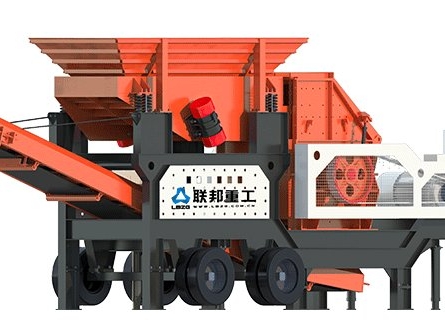
The YCG tyre-type mobile range mirrors the fixed stages: YCG-J750 mobile jaw station (host PE-750×1060, 110-230 t/h, 380V/440V, trailer-mounted, no foundation needed), YCG-I1214 mobile impact station (100-180 t/h), YCG-C160 mobile cone station (90-210 t/h), YCG-VSI8518 mobile sand-making station (100-180 t/h) and YCG-S2460 mobile screening station with two to three decks and 80-300 t/h screening capacity.
Representative models across the range
| Stage | Series / model | Published parameters | Typical duty |
|---|---|---|---|
| Primary crushing | PE-600×900 | Feed opening 600×900 mm; max feed ≤520 mm; output 65-130 mm; 50-150 t/h; 75 kW; 16.6 t | Medium quarry, mineral processing, infrastructure |
| Primary crushing | PE-1200×1500 | Feed opening 1200×1500 mm; max feed ≤1000 mm; output 150-350 mm; 300-800 t/h; 200 kW; 109 t | Ultra-large mine and aggregate production |
| Fine crushing | PEX-150×750 | Feed opening 150×750 mm; max feed 120 mm; discharge 18-48 mm; 15 kW | Secondary/tertiary fine crushing |
| Secondary/tertiary | CS-160 (B160) | Cone diameter 1295 mm (4¼ ft); fine 109-181 t/h; 185 kW; 27 t | Hard rock secondary and tertiary crushing |
| Secondary/tertiary | PYB-1200 | Crushing head 1200 mm; feed opening 145 mm; output 20-50 mm; 110-168 t/h; 110 kW | Medium-large hard stone crushing |
| Impact crushing | PF-1214 | 132-160 kW; rotor Φ1250×1400 mm; max feed 400 mm; 80-180 t/h | Limestone quarry, construction waste recycling |
| Hammer crushing | PC-1000×1000 | Discharge <15 mm; 100-260 t/h; 132-160 kW; 11 t | Stone plant, cement, coal, building material fine crushing |
| Sand making | VSI-7611 | 110-150 kW; max feed 35 mm (soft) / 30 mm (hard); rock-on-rock | Artificial sand making, particle reshaping |
| Dry sand system | EIS-1000 | 140-180 kW; feed size ≤45 mm; dry-type production with intelligent monitoring | Dry-type artificial sand production, tailings recycling |
| Screening | 4YK-1248 | 4 layers; capacity 15-200 t/h; 5.5 kW; 4.1 t | Aggregate grading and medium-fine screening |
| Feeding | ZSW-590×110 | Trough 5900×1100 mm; 160-350 t/h; dual vibrating motor drive | Medium-large stone plant feeding and pre-screening |
| Conveying | B800 | Belt width 800 mm; 1.0-2.0 m/s; 280-500 t/h; custom length | Large-volume aggregate transport |
| Grinding | MB-3.6×4.5 | Drum Ø3.6×4.5 m; 300-400 t/h (weathered sand); 1,250-1,500 kW | Mega sand-making projects |
| Mobile crushing | YCG-J750 | Host PE-750×1060; 110-230 t/h; 380V/440V; trailer-mounted | Mobile quarry, on-site construction waste crushing |
All parameters above are taken from LBZG's published product data. Rated capacity is measured under standard test conditions; site throughput varies with material hardness, feed size, moisture and wear-part condition.
Customization and configuration flexibility
Several customization capabilities are documented in the product and application data. Complete lines are engineered project by project, with full-set drawings, layout design and equipment lists issued for stationary installations. Electrical configuration is adapted to local supply at 380V, 440V, 415V or 660V, and options exist for tropicalized or desert-rated configurations for high-temperature, arid or high-altitude sites, together with multilingual manuals. Wear parts can be specified by material ratio - high-manganese steel or high-chrome cast iron - according to the abrasiveness of the customer's rock, and the company supplies original wear parts for jaw plates, blow bars, hammers, bowl liners and mantles. Where private-label or OEM/ODM branding is required, that is a commercial and documentation matter to be defined in writing per project rather than an assumption to be made at quotation stage.
Company Strength Analysis
Manufacturing capacity
Two production bases covering 120,000 m², of which 40,000 m² is standard workshop space, support more than 150 sets of processing equipment and a stated annual output of 2,000 units. For a buyer, the practical implication is that the primary crusher, secondary crusher, screens, feeders and conveyors in one line can be produced under a single quality system rather than assembled from multiple suppliers - which simplifies interface responsibility when a circuit underperforms.
Research and development
The company reports over 40 R&D personnel within a workforce of about 110. Its R&D structure includes a municipal-level engineering laboratory, a municipal-level enterprise technology center and a provincial-level "One Enterprise, One Technology" R&D center. It carries out industry-university-research cooperation with China University of Mining and Technology and Shandong University, and it is a participant in revising national industry standards for crushers. Participation in standards revision is a meaningful signal for buyers evaluating whether a supplier's design practice is aligned with current national requirements rather than only with its own catalogue.
Quality control and certifications
LBZG holds ISO 9001 quality management system, ISO 14001 environmental management system and OHSAS 18001 occupational health and safety system certifications, plus CE export certification for foreign trade projects. From a procurement standpoint these map onto three different risks: product consistency (ISO 9001), environmental compliance at site (ISO 14001), and workplace safety and operator protection (OHSAS 18001), with CE documentation governing customs clearance and acceptance in CE markets. For mobile units, ISO 21873-2:2019 sets the applicable international safety requirement for mobile crushers.
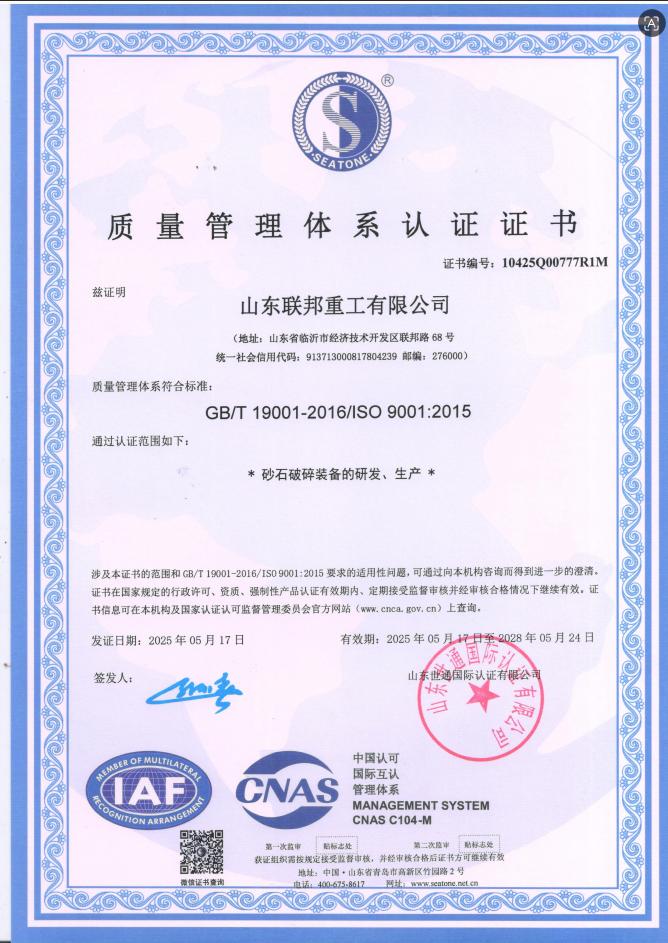
The company also holds government-announced designations: National High-tech Enterprise (re-recognised in 2023), Shandong Provincial-level Specialized, Refined, Differential & Innovative Small-and-Medium-sized Enterprise (announced by the Shandong Provincial Department of Industry and Information Technology), National-level Science-and-Technology-Oriented Small-and-Medium-sized Enterprise, and the Linyi Mayor Quality Award.
Global supply and service capability
A 30% export ratio across more than 40 countries shapes the service model. For overseas quarry and infrastructure projects, the documented support package includes equipment matched to local voltage, climate-adapted options, multilingual manuals, an overseas service network, spare-parts kits supplied with the line, dust-removal systems and long-distance remote service support for sites running continuous production. That combination matters most where a line is expected to run 24/7 and a single failed wear part can idle the whole circuit.
Market Evaluation and Industry Recognition
The verifiable recognition signals for LBZG fall into two groups: published project references and government-announced qualifications.
On the project side, the company states that it serves infrastructure projects of central enterprises including China Railway, China State Construction, China Communications Construction and Gezhouba Group. The Lunan High-Speed Railway is listed as an official reference project, with a requirement profile of railway ballast and high-strength concrete aggregate, 24/7 continuous production, cubic particle shape and fineness modulus compliance in the 2.3-3.0 band - the same fineness modulus range quoted for the EIS-1200 dry sand system. Other documented application environments include hydropower engineering, new town and airport construction, highway and railway construction, overseas quarry and infrastructure development, construction and demolition waste recovery, and solid hazardous waste disposal.
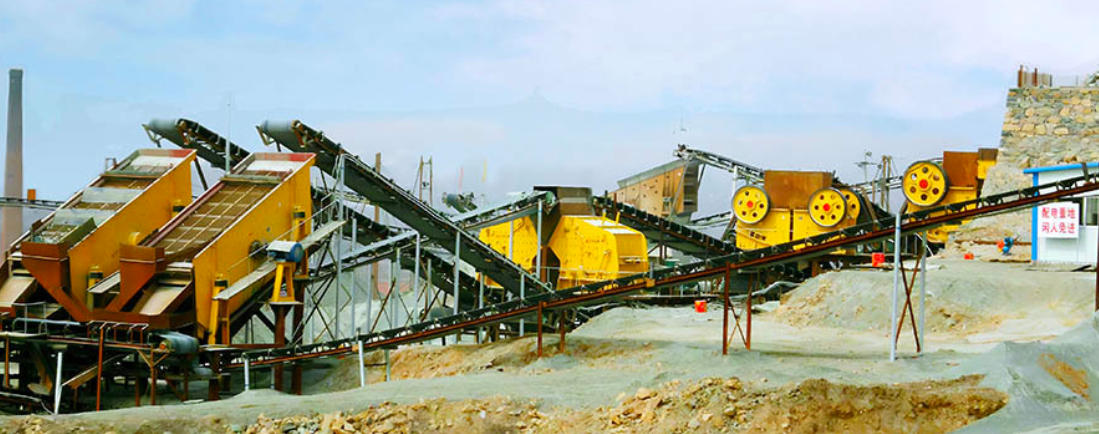
On the qualifications side, the National High-tech Enterprise status and the provincial-level Specialized, Refined, Differential & Innovative designation are granted through government review processes rather than self-declaration, and the Linyi Mayor Quality Award is a municipal quality recognition. Taken together with participation in national crusher standards revision, these provide a third-party layer of evidence that a buyer can verify independently of the supplier's own marketing material.
Step-by-Step Breakdown: From Inquiry to Commissioning
The following sequence reflects the selection logic documented in LBZG's published technical guidance. It is the order in which a buyer should supply information, because each later decision depends on the previous one.
- Define the feed and the product. Material type and compressive strength, maximum feed size, moisture and clay content, target finished fractions, required capacity in t/h, site conditions, power supply and intended project life. Missing feed data is the single most common cause of a wrong model recommendation.
- Match capacities across stages. The documented rule is "upstream surplus, downstream step-down": feeder capacity at 1.1-1.2× rated jaw capacity; secondary crusher at 1.0-1.1× the actual primary output; vibrating screen at 1.2-1.3× line capacity; belt conveyor at 1.2× maximum flow. For example, a PE600×900 rated 60-160 t/h pairs with a ZSW490×110 feeder and a 2YK1860 screen. The purpose is to keep units running at roughly 70-90% of rated load, avoiding both crusher idling and material pile-up.
- Select the crushing stage by material, not by price. For hard abrasive rock such as granite and basalt, the documented recommendation is jaw primary plus cone secondary/tertiary, with VSI shaping if sand or strict particle shape is required. For medium-hard brittle material such as limestone and shale, jaw plus PF impact is the standard, cost-effective route. Choosing an impact crusher as the main hard-rock secondary to save initial investment shifts cost into blow-bar consumption.
- Decide whether sand making is required. If the product set is coarse and medium aggregate only (approximately 5-40 mm), the tertiary sand-making unit can be omitted, reducing both capital and installed power. If a 0-5 mm manufactured sand fraction is required for concrete or asphalt, a VSI or dry sand-making system is added, and can be combined with vibrating screens and a sand washer to complete the sand flow.
- Choose stationary or mobile architecture. Stationary lines suit long-term, stable quarries with high hourly output; tyre-type mobile stations suit short-duration or dispersed sites with no good foundation, and integrate feeding, crushing and screening on one chassis.
- Validate with a sample. A representative sample - typically around 50 kg - is test-crushed to verify product shape, fines content and wear-part consumption before the model is finalised. This step is particularly relevant when comparing an impact crusher against a hammer crusher on limestone.
- Fix the documentation and compliance package. Certificates matched to the specific model, English manuals, drawings, spare-parts lists, material and welding inspection reports, a factory test-run record, and sea-worthy packing and shipping documents.
- Plan delivery, commissioning and after-sales. Production schedule, inspection points, installation and commissioning support, operator training, original spare-parts supply and remote technical support for the operating phase.
Use Cases: Where LBZG Crushing Lines Operate
Six application environments are documented in LBZG's application data, each with a different specification driver.
- Highway and railway construction. High-grade aggregate and manufactured sand under 24/7 production, with strict gradation and particle-shape requirements; the line must tolerate open-pit quarry conditions, high-abrasion material and all-weather operation.
- High-speed rail reference project (Lunan High-Speed Railway). Railway ballast and high-strength concrete aggregate, including manufactured sand for subgrade and sleeper concrete, with stable grain-size control, cubic particle shape and fineness modulus compliance.
- Hydropower engineering. High-strength concrete aggregate for dam construction and manufactured sand for mass concrete, in long-term continuous production with wear-resistant crushing chambers and remote-site serviceability.
- New town and airport construction. Large-volume aggregate and airport-runway-grade concrete aggregate, with dust suppression and mobile backup for multi-site projects.
- Overseas quarry and infrastructure. Quarry development with full equipment plus spare-parts kits, voltage adaptation across 380V/440V/415V/660V, tropicalized or desert-rated options, multilingual manuals and long-distance remote service support.
- Construction and demolition waste recovery, and solid hazardous waste disposal. On-site zero-transport processing of demolition material into recycled aggregate, recycled concrete bricks and recycled soil using trailer-mounted mobile operation, with magnetic separation, low noise and low dust emission; for hazardous waste, sealed enclosures, negative-pressure dust collection and corrosion-resistant materials, with an explosion-proof motor option.
Comparison Table: Matching Line Architecture to Project Conditions
The first architectural decision on any stone crushing production line project is stationary versus mobile. The comparison below uses LBZG's published selection guidance.
| Selection criterion | Stationary complete crushing line | Tyre-type mobile crushing station (YCG) |
|---|---|---|
| Recommended project profile | Long-term large or medium quarry, over 2-3 years of service life, stable site and stable power supply | Short-term projects, scattered quarry points, frequent site transfer, poor foundation conditions |
| Capacity positioning | Higher hourly output; suitable for high-tonnage production; documented guidance targets ≥80 t/h and above | Integrated feeding, crushing and screening on one chassis, with an upper limit on maximum capacity |
| Foundation and civil works | Requires site preparation, foundations and a longer construction period | Trailer-mounted, no heavy concrete foundation required; supports 380V/440V |
| Relocation | Not designed for relocation; fixed layout | Site transfer by trailer; whole unit moves between job sites |
| Typical configuration | PE jaw + cone or impact crusher + YK circular vibrating screen + BS belt conveyors, with full drawings, layout design and equipment list | Jaw (YCG-J750, 110-230 t/h), impact (YCG-I1214, 100-180 t/h), cone (YCG-C160, 90-210 t/h), sand-making (YCG-VSI8518, 100-180 t/h) or screening (YCG-S2460, 80-300 t/h) chassis |
| Cost profile | Lower cost per ton in long-term operation; higher upfront land and civil investment | Reduces foundation investment and raw-stone hauling cost; higher unit operating cost from tyre and transport factors |
| Best fit when | Output, stability and per-ton cost are the dominant criteria | Mobility, permitting or dispersed material sources are the dominant criteria |
Frequently Asked Questions
1. Which certifications should a stone crushing production line manufacturer hold before you place an order?
A buyer should confirm ISO 9001 quality management certification, environmental and occupational safety system certification where the project or lender requires it, and CE conformity documentation for equipment destined for CE markets. For mobile crushers, ISO 21873-2:2019 specifies safety requirements and verification for mobile crushers used to crush rock or reprocess construction materials. LBZG publishes ISO 9001, ISO 14001 and OHSAS 18001 system certifications, CE export certification for foreign trade projects, and participation in revising national crusher industry standards. Beyond certificates, request English manuals, drawings, spare-parts lists, material and welding inspection reports and a factory test-run record, and confirm that the certificates correspond to the exact model ordered rather than to the company in general.
2. Can the same manufacturer supply a line for hard rock such as granite and basalt as well as for limestone?
Yes, but through different machine families. For hard, abrasive rock with compressive strength above roughly 250 MPa and high silica content, the documented route is jaw primary crushing plus cone secondary/tertiary crushing, with a VSI unit added when sand or strict particle shape is required; impact and hammer crushers are not used as the main hard-rock secondary because blow bars and hammers wear quickly and push up cost per ton. For medium-hard brittle material such as limestone and shale, a jaw plus PF impact combination is the standard configuration. LBZG's range covers both routes: PE jaw crushers from PE-250×400 to PE-1200×1500, CS hydraulic and PY spring cone crushers from PYB-900 to PYB-2200, PF impact crushers (PF-1214, PF-1315), PC and PCX hammer crushers, PX fine impact sand makers, and VSI-7611 and VSI-8518 sand makers.
3. Is a sand-making unit always required, and what drives the budget of a crushing line?
A sand-making unit is not always required. If the target product set is coarse and medium aggregate - roughly 5-40 mm - with no manufactured sand fraction, the tertiary sand-making stage can be omitted, which lowers both capital expenditure and installed power. If a 0-5 mm manufactured sand fraction is needed for concrete or asphalt, a VSI or dry sand-making system is added after the cone or impact stage and can be combined with a vibrating screen and sand washer. The main budget drivers are the primary jaw size, whether a cone is required instead of an impact crusher, the number of screen decks, total conveyor length, and electrical adaptation to 380V, 440V, 415V or 660V. Supplying the target finished-product fractions lets the process flow be adjusted rather than over-specified.
4. Can the configuration be validated with a test before the full line is purchased?
Yes. Sample test crushing is a standard validation step: a representative sample, typically around 50 kg, is crushed to verify product shape, fines content and wear-part consumption before the final model is selected. This matters most when an impact crusher and a hammer crusher are being compared on the same limestone feed, because the two produce different cubical content and different fines ratios, and the decision affects both product quality and long-term wear cost. Request that the test result be recorded against the target gradation so it can be checked after commissioning.
5. How should a buyer approach lead time, documentation and the first commercial step?
The most efficient first step is to request a written configuration proposal based on five inputs: material type and hardness, maximum feed size, target capacity in t/h, required finished fractions, and site conditions including power supply and project duration. In return, a supplier should provide model selection, equipment list and layout drawing. For a complete line, ask for the production schedule, inspection and test-run plan, packing and shipping document set, and the spare-parts kit list in the same proposal, so that lead time and documentation scope are fixed before the order is placed rather than negotiated afterwards.
Conclusion: Industry Positioning, Procurement Value and Outlook
Within the stone crushing production line manufacturer category, LBZG occupies a specific position: a mid-sized, single-site Chinese manufacturer with in-house engineering, a complete stage-by-stage product range, documented quality system certification, and a 30% export share across more than 40 countries - but without the scale of the largest global crushing groups. That profile has direct procurement implications.
Where the procurement value sits. Because feeding, primary crushing, secondary and tertiary crushing, screening, conveying, sand making and washing are all produced under one quality system, interface responsibility for a complete circuit sits with one supplier. The published evidence base - ISO 9001, ISO 14001, OHSAS 18001 and CE certification, participation in national crusher standards revision, National High-tech Enterprise status, and a high-speed rail reference project - gives a buyer verifiable material to attach to an internal supplier-approval file. Voltage and climate adaptation, multilingual manuals, spare-parts kits and remote support reduce the operational risk of overseas installation.
Where the buyer should apply scrutiny. Rated capacity figures require site-condition adjustment, so a sample test and a written capacity-matching calculation should precede any purchase order. Wear-part consumption on hard abrasive rock should be modelled against the actual material, not against a generic figure. Private-label or OEM/ODM arrangements, warranty scope for consumable wear parts, and model-specific certificate coverage should all be confirmed in writing, since direct-contact consumables such as hammers, screen plates, spiral blades and screen mesh are normally treated as wear items rather than manufacturing defects.
Outlook. With the global stone crushing equipment market estimated at USD 8.47 billion in 2024 and China the leading exporter of crushing and grinding machinery under HS 847420 at USD 1.38 billion, the competitive axis continues to shift from machine supply toward line engineering, documentation quality and lifecycle support. For manufacturers of LBZG's profile, the differentiators that matter to buyers are the ones already visible in its published data: complete-stage coverage, in-house R&D with university cooperation, government-recognised qualifications, and export-ready documentation and service. Buyers evaluating the shortlist should test those claims against their own project data rather than against catalogue headlines.
Next Step: Request a Configuration Proposal or the Full Catalogue
LBZG publishes its company and product catalogue for public download here: Shandong Lianbang Heavy Industry catalogue (PDF).
To receive a model selection, equipment list and layout drawing for a specific project, send the material type and hardness, maximum feed size, target capacity in t/h, required finished fractions, site conditions and power supply. Contact LBZG at lbzg@lbcrusher.com, selina@lbcrusher.com or lisa@lbcrusher.com, on WhatsApp at +86 13953887097, or through the official site at www.sypsj.cn. For projects where feed data is uncertain, request a sample test-crushing run before the model is finalised.
Have Questions or Need More Details?
Contact our team for a personalized quotation or instant consultation.
Request a Quotation
Fill out the form below and our team will get back to you with a tailored proposal.
WhatsApp Direct Chat
Prefer to chat in real-time? Message us on WhatsApp for instant assistance & quick answers.
- Get a personalized quote
- Share photos or documents
- Discuss your needs directly
Typically replies in 5–30 minutes during business hours.