Stone Crushing Production Line: Sizing YK Screens with PX, PC, PCX & 2PG-Y Crushers
Stone Crushing Production Line: Sizing YK Screens with PX, PC, PCX & 2PG-Y Crushers
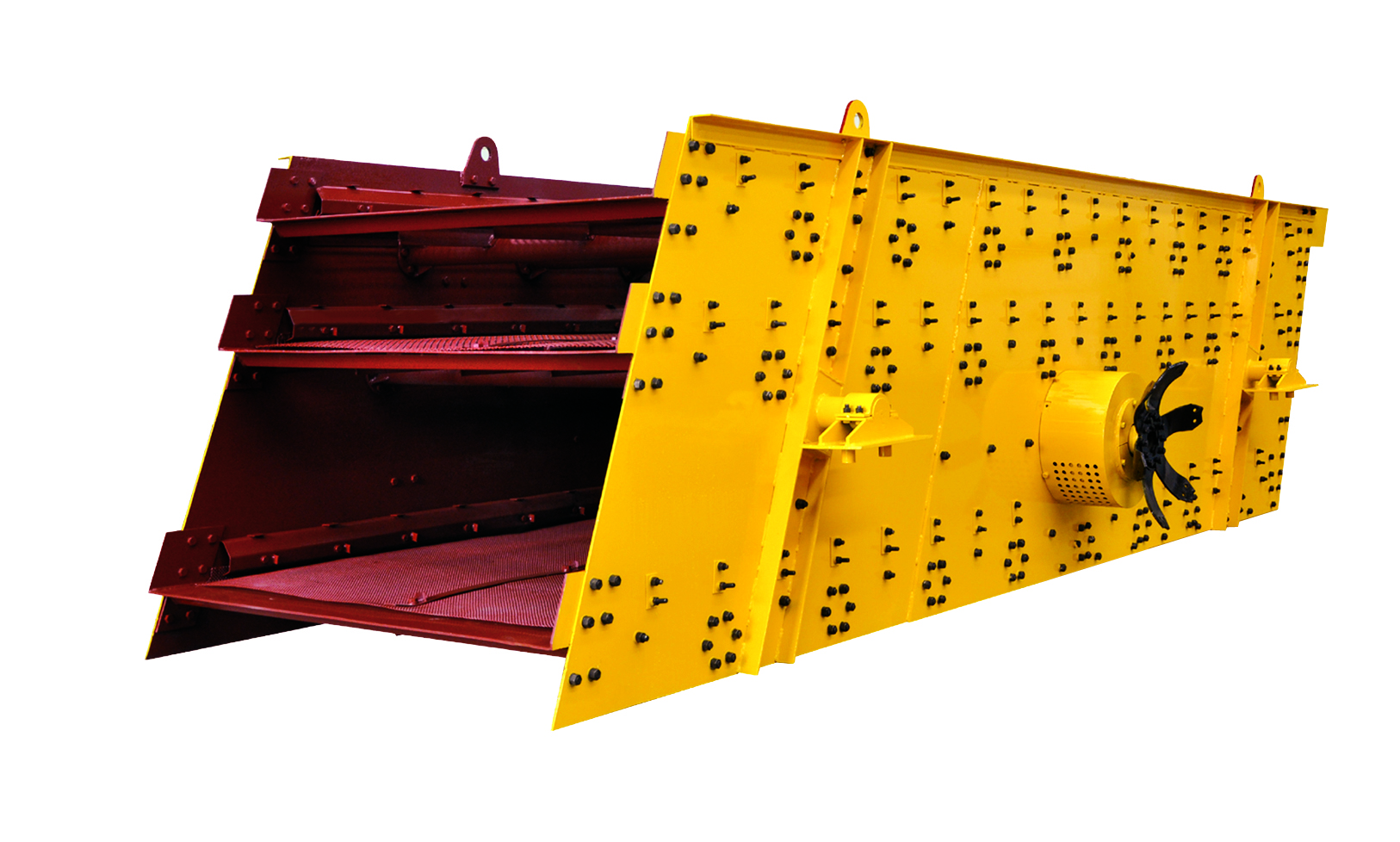
A stone crushing production line almost never loses tonnage because the crusher is too small. It loses tonnage because the screen and the crusher were sized as separate decisions. The YK circular vibrating screen is the metering device of the circuit: it decides how much material returns to the crusher, which fractions leave the plant, and how much of the crusher’s rated capacity is actually usable on the belt.
YK screen sizing on a stone crushing production line is driven by four inputs: the design throughput, the feed gradation delivered by the crusher, the number of product fractions required (which sets the deck count), and the circulating load created by the crusher stage. Screen nominal capacity should sit around 1.2× above line capacity, and the crusher family — PX fine impact, PC hammer, PCX strong-impact hammer, or 2PG-Y hydraulic two-roll — decides how much of the crusher discharge becomes finished product versus return material.
This technical guide walks through that sizing sequence for a stone crushing production line built around YK screens and the four crusher families above. All values come from published model data for equipment manufactured by Shandong Lianbang Heavy Industry Co., Ltd. (brand Shanyuan LBZG), a Linyi-based manufacturer of crushing, sand-making and solid-waste recycling equipment holding ISO 9001, ISO 14001 and OHSAS 18001 certifications.
Why screen sizing, not crusher sizing, usually decides plant tonnage
Screen sizing problems surface as circulating load, not as an obvious breakdown. If the deck area is too small for the tonnage, part of the finished-size material cannot pass in time, leaves with the oversize fraction, and is crushed a second time. The crusher draws its rated current, the plant still does not make its design tonnage. Four symptoms are common:
- Belt conveyor overflow at the screen discharge, even at low crusher load.
- Fines (0–5 mm) rising because of over-crushing on the return loop.
- Product gradation drifting outside the specification on the routine sieve analysis.
- Screen box behaviour (amplitude, noise) changing because the unit is either over-loaded or under-loaded.
Under-sizing is a capital decision, not a design decision. A screen that is too large costs extra deck area and motor power; a screen that is too small costs operating hours, crusher wear and lost revenue gradation for the life of the plant.
Deck count is a separate failure mode. Each deck adds one cut. If the specification calls for four products, a 2-deck screen cannot meet it — the two fractions on the lowest deck have to be blended, or a second screen must be added. If the specification calls for two products, a 4-deck screen only adds maintenance load on the lowest deck with no benefit.
The last failure mode is the crusher pairing. A PC hammer crusher running on hard, silica-rich rock shortens hammer life and pushes up cost per ton. A crusher that delivers more reduction than the plant needs forces a shorter, more overloaded screen. A crusher that delivers too little reduction forces a longer return loop.
The correct design order is therefore: fix tonnage and product fractions first; choose the crusher family by material and reduction ratio second; size the YK screen, feeder and belts around those decisions third.
Industry background
The global stone crushing equipment market was estimated at USD 8.47 billion in 2024 (Market Research Future). Jaw crushers held a 35.2% share in 2025 (Polaris Market Research), reflecting the dominance of the primary crushing stage in plant design. China was the leading exporter of machines used to crush or grind stone, ores and minerals (HS 847420), with USD 1.38 billion of exports in 2024 (Observatory of Economic Complexity). For comparison, in the United States, crushed stone production reached 1.5 billion tons in 2023 (USGS / Research Nester).
The market context matters because it explains why screen sizing has become the second-order design question after the crusher. Primary crushers dominate equipment spend and equipment catalogues. But within an operating plant, it is the YK screen and its circuit that set daily output. The screen is also the trade-off point between capital and operating cost: larger decks mean bigger capital and lower circulating load; smaller decks mean smaller capital and more over-crushing, more crusher wear and less usable gradation.
The four inputs that decide YK screen sizing
1. Design throughput and the 1.2× rule
The starting rule for YK screen selection on a stone crushing production line is straightforward: the screen’s nominal capacity should be about 1.2× the line’s design capacity. A line built for 150 t/h of finished aggregate is sized with a screen rated around 180 t/h.
No plant runs on ideal feed. Raw material moisture, near-size particles, uneven feeding and wear of the crusher discharge gap all reduce the screen’s effective throughput below its catalogue figure. A screen that matches the line exactly at the catalogue number is already under-sized in practice.
Within the YK screen family (2YK-1248 through 3YK-2470), the nominal capacity range published for typical feed is 15–200 t/h across all models. The practical selection levers are therefore deck count (how many cuts are required) and deck area (screen width × length, which determines screening area per hour). The larger models — 2YK/3YK/4YK-1854, 2YK/3YK/4YK-2160 and 2YK/3YK/2470 — carry the heavier decks and larger motor sizes (11 kW up to 22 kW) needed for the higher feed rates that come with bigger crushers.
2. Feed gradation delivered by the crusher
The screen can only classify what the crusher sends it. That means the crusher’s rated discharge size and discharge curve are the real “feed gradation” input to screen selection — not the raw quarry feed.
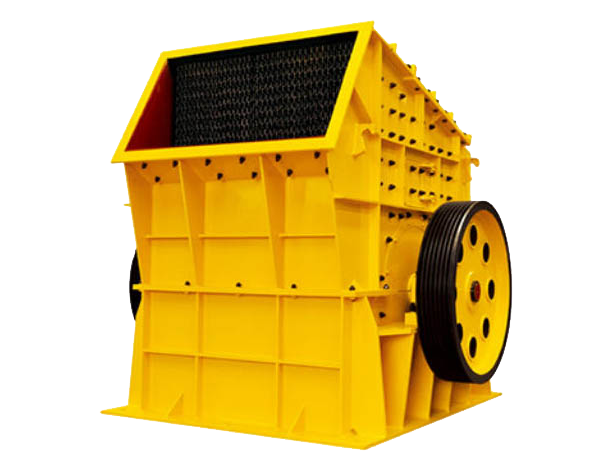
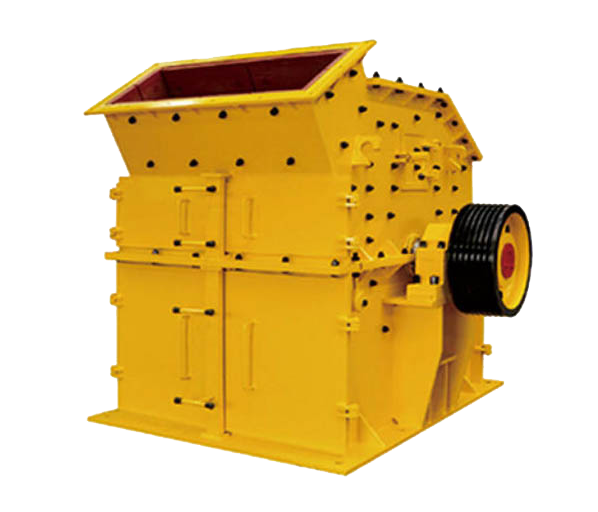
- PC Crusher (hammer family) performs medium and fine crushing to a discharge under 15 mm (compact and standard configurations) or under 20–25 mm (heavy-duty configurations). Its reduction ratio is high, so a large share of the screen feed arrives already at finished size.
- PCX Crusher (strong-impact hammer) performs fine/tertiary crushing to under 10 mm (PCX-0808 through PCX-1212) or 15–20 mm (PCX-1515 through PCX-1822). It uses the same high reduction ratio as the PC, but with a stronger work face for medium-hard material.
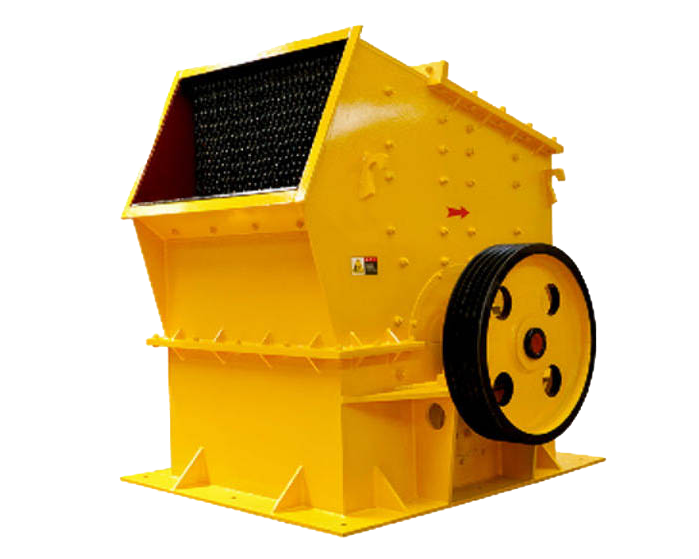
- PX Crusher (fine impact / sand maker) discharges in the 5–20 mm range, so it produces the feed for either a sand-making deck or a final fine aggregate fraction. The family runs from PX-800 (max feed 300 mm, 30–45 t/h in crushing duty) up to PX-1822 (max feed 800 mm, 210–270 t/h).
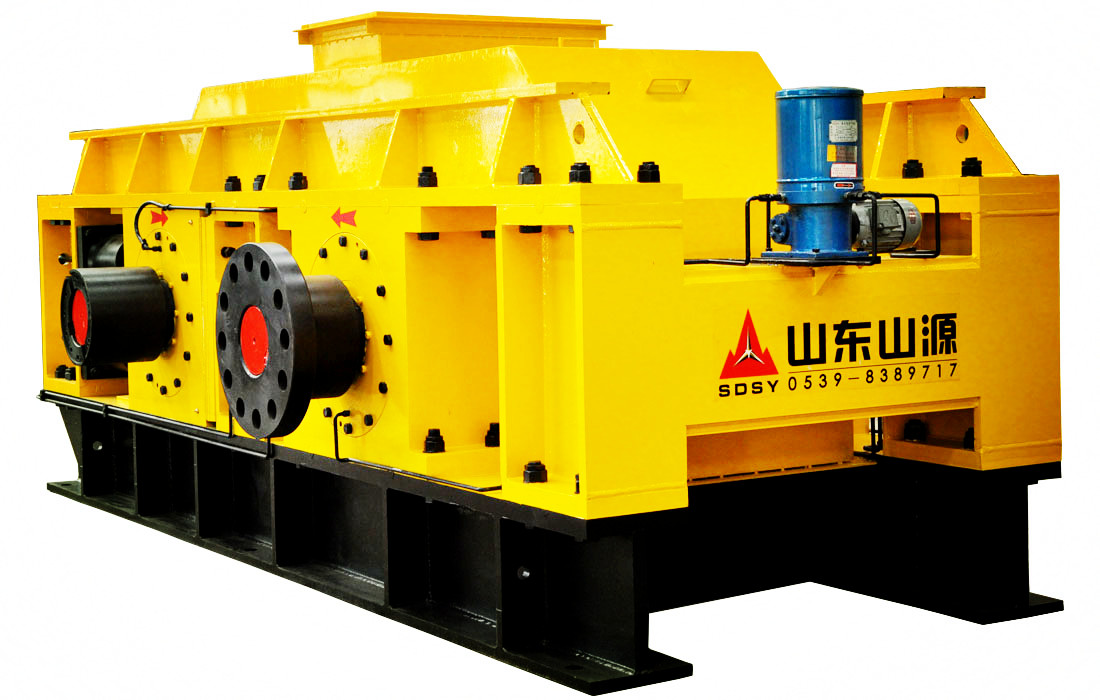
- 2PG-Y Roller Crusher (hydraulic two-roll) works by compression and produces a narrower, less fines-rich discharge. Capacity across the three listed models (2PG-600, 2PG-750, 2PG-1000) is stated as 2–18 t/h, so the family belongs on smaller fine circuits or on materials such as cement, refractory or coal rather than as a large aggregate secondary stage.
3. Product fractions and the deck count
Deck count is determined by the required number of product cuts:
- 2-deck YK screen → three product streams.
- 3-deck YK screen → four product streams.
- 4-deck YK screen → five product streams.
A typical three-product aggregate specification (0–5 mm, 5–20 mm, 20–31.5 mm) with an oversize-return line uses a 2-deck screen. A four-product specification (0–5, 5–10, 10–20, 20–31.5 mm) requires at least three decks. The step from 3-deck to 4-deck is light in weight terms — 3YK-1548 is rated at 4.8 t and 4YK-1548 at 5.2 t — but it changes the number of cuts and the maintenance requirement on the lowest deck.
4. Circulating load created by the crusher stage
Circulating load is the share of screen oversize that returns to the crusher. Two things push it up: a wide crusher discharge curve (more oversize in the screen feed), and insufficient screen area (near-size material cannot pass in time and travels with the oversize).
The practical implication is that screen sizing should be re-checked against the crusher’s actual discharge curve, not only against the plant’s design tonnage. A PC or PCX crusher discharging at under 15–20 mm on medium-hard material puts a fine, narrow screen feed on the deck and lets a smaller screen do the job. A crusher discharging a wider curve puts more oversize back into circulation, and the correct response is to add deck area, not fewer decks.
Step-by-step: sizing a YK screen and matching the crusher
Step 1 — Fix the design tonnage and the operating profile. Start from the contractual tonnage (for example, 150 t/h of finished aggregate) and note operating hours per day or year. Catalogue capacity is measured under ideal conditions; actual throughput varies with feed hardness, feed size, moisture, voltage stability, feeding continuity and wear condition of consumable parts. Leave a margin.
Step 2 — Fix the product fractions and cut sizes. List every product (0–5 mm, 5–10 mm, 10–20 mm, 20–31.5 mm, etc.). Count the cuts. This count sets the deck count on the YK screen.
Step 3 — Choose the crusher family by material and reduction ratio.
- Medium-hard, brittle material (limestone, gypsum, shale, coal) — PC hammer or PCX strong-impact hammer, high reduction ratio, one-pass reduction to under 15–20 mm.
- Fine aggregate or manufactured sand from medium-hard material — PX fine impact crusher, 5–20 mm discharge.
- Cement, refractory, metallurgy or coal fine crushing — 2PG-Y hydraulic two-roll, compression duty at low throughput.
Step 4 — Read the crusher discharge size as the screen’s top size. The screen’s top deck and mesh size must be chosen so the crusher discharge separates cleanly. A PC-1000×800 discharging at under 15 mm feeds a fine screen; a PC-1600×1600 discharging at under 25 mm at 500–1000 t/h feeds a larger, multi-deck screen.
Step 5 — Apply the 1.2× rule. Screen nominal capacity target = 1.2 × line capacity. Confirm the model’s stated capacity range (15–200 t/h across the YK family) and set the deck count to deliver the required cuts.
Step 6 — Match the feeder and the belt conveyors. Feeder capacity = 1.1–1.2× the rated capacity of the crusher it feeds; belt conveyor capacity = 1.2× the maximum flow on that section.
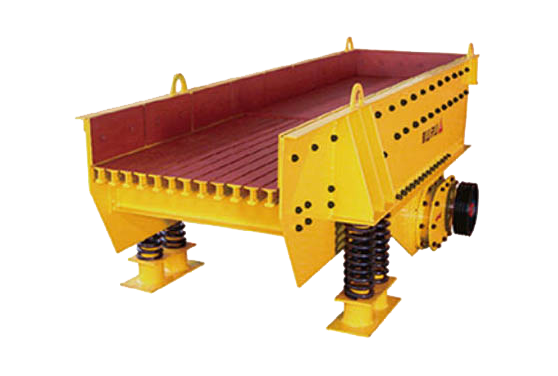
- ZSW-380×96 feeder: 96–160 t/h.
- ZSW-490×96 feeder: 120–210 t/h.
- ZSW-490×110 feeder: 80–220 t/h, 15–22 kW, pre-screening function.
- ZSW-600×130 feeder: 250–400 t/h.
- BS B650 belt conveyor (belt width 650 mm, 1.2–2.0 m/s): 80–200 t/h.
- BS B800 belt conveyor: 280–500 t/h.
- BS B1000 belt conveyor: 430–850 t/h.
- BS B1200 belt conveyor: 650–1200 t/h.
Step 7 — Confirm operating conditions and service. Overseas projects frequently need 380 V / 440 V / 415 V / 660 V motor options, tropical or desert-rated finishes, and multilingual manuals. Wear parts — hammers, sieve plates, screen mesh, spiral blades — are consumables and should be budgeted as part of the plant’s operating cost, not as a warranty item.
Use cases
Case 1 — Limestone aggregate line, 150 t/h.
Circuit: ZSW-490×96 feeder (120–210 t/h) → PE600×900 primary jaw (50–150 t/h, ≤520 mm feed) → PC-1000×800 or PCX-1010 secondary/fine crusher (80–200 t/h and 50–100 t/h respectively) → 3YK-2160 three-deck YK screen (15–200 t/h) → BS B650 belt conveyors (80–200 t/h). The three-deck screen produces four streams (oversize return, 0–5, 5–20, 20–31.5 mm). The PC/PCX crusher’s high reduction ratio places most of the screen feed below 15 mm.
Case 2 — Overseas quarry, 350 t/h continuous.
A Belt & Road export project delivered a complete aggregate production line built around 20 units of PE-600×900 jaw crushers, PF-1214 impact crushers, YK screens and BS belt conveyors. The line achieved 350 t/h continuous output and has run for more than three years with remote service support. The screening stage combined YK screens with belt conveyors sized above the nominal line flow, matching the 1.2× rule applied here.
Case 3 — Manufactured sand plant.
Where the product is manufactured sand, the feed to the sand-making stage is already crushed. A PX Crusher (for example PX-1413, 90–130 t/h at 5–20 mm discharge, or PX-1614, 100–140 t/h) performs the fine-crushing step, and the YK screen cuts the 0–5 mm sand fraction before an optional sand washer. The YK screen is sized at 1.2× the sand-line capacity, and the deck count is set by the number of sand and fine-aggregate fractions required.
Case 4 — National key project reference.
The Lunan High-Speed Railway aggregate supply line was configured with 14 main units across a 2,000–40,000 t/d capacity range: three PE-1200×1500 jaw crushers for the primary stage, three sets of cone crushers for the hard-aggregate secondary stage, two VSI vertical-shaft impact sand makers for shaping, four YK-series vibrating screens for aggregate screening, and two ZSW-series vibrating feeders. The project has operated stably for more than five years, meeting high-standard railway ballast aggregate requirements — including the YK screen sizing decisions that this guide describes.
Comparison tables
YK Screen models — representative parameters
| Model | Decks | Screen hole | Capacity | Motor power | Total weight |
|---|---|---|---|---|---|
| 2YK-1248 | 2 | <50 mm | 15–200 t/h | 5.5 kW | 3.6 t |
| 3YK-1248 | 3 | <50 mm | 15–200 t/h | 5.5 kW | 3.8 t |
| 4YK-1248 | 4 | <50 mm | 15–200 t/h | 5.5 kW | 4.1 t |
| 2YK-1548 | 2 | <50 mm | 15–200 t/h | 7.5 kW | 4.5 t |
| 3YK-1548 | 3 | <50 mm | 15–200 t/h | 7.5 kW | 4.8 t |
| 4YK-1548 | 4 | <50 mm | 15–200 t/h | 7.5 kW | 5.2 t |
| 2YK-1854 | 2 | <50 mm | 15–200 t/h | 11 kW | 5.5 t |
| 3YK-1854 | 3 | <50 mm | 15–200 t/h | 11 kW | 5.8 t |
| 4YK-1854 | 4 | <50 mm | 15–200 t/h | 11 kW | 6.2 t |
| 2YK-2160 | 2 | <50 mm | 15–200 t/h | 15 kW | 7.2 t |
| 3YK-2160 | 3 | <50 mm | 15–200 t/h | 15 kW | 7.5 t |
| 4YK-2160 | 4 | <50 mm | 15–200 t/h | 15 kW | 7.9 t |
| 2YK-2470 | 2 | <50 mm | 15–200 t/h | 22 kW | 8.5 t |
| 3YK-2470 | 3 | <50 mm | 15–200 t/h | 22 kW | 8.8 t |
All YK Screen frames use carbon steel with manganese steel screen mesh. Models 3YK-1548 and above are documented in reference projects including the Lunan High-Speed Railway line and the CNBM and China State Construction aggregate plants.
Crusher family comparison on the YK screen sizing question
| Crusher family | Mechanism | Typical discharge | Capacity range | Material fit | Effect on screen selection |
|---|---|---|---|---|---|
| PX Crusher | Fine impact (sand maker) | 5–20 mm | 30–45 t/h (PX-800) up to 210–270 t/h (PX-1822) | Sand making, building material, metallurgy, refractory; medium-hard material | Narrow, well-controlled top size; screen sized for a fine, tight feed |
| PC Crusher | Hammer | <10 mm to <25 mm (model-dependent) | 30–50 t/h (PC-400×300) up to 500–1000 t/h (PC-1600×1600) | Limestone, cement, coal, mining, building material | High reduction ratio; large fraction of feed already at finished size |
| PCX Crusher | Strong-impact hammer | <10 mm to <20 mm | 30–50 t/h (PCX-0808) up to 250–350 t/h (PCX-1822) | Fine/tertiary crushing of limestone, coal, gypsum, shale | High reduction ratio; fine screen cut; medium-hard material only |
| 2PG-Y Roller Crusher | Hydraulic two-roll compression | Narrow fine discharge | 2–18 t/h | Cement, metallurgy, building material, refractory, coal | Narrow feed to screen; small plant; screen sized small |
FAQ
Deck count follows the number of product fractions. A 2-deck screen produces three output streams, a 3-deck produces four, and a 4-deck produces five. A three-product specification with an oversize return fits a 2-deck model such as 2YK-1548; a four-product specification requires at least 3 decks, such as 3YK-2160. Increasing deck count within the same footprint adds little weight (3YK-1548 is 4.8 t, 4YK-1548 is 5.2 t) and no additional floor space; it adds one more cut and one more maintenance point on the lowest deck.
For low-abrasion, medium-hard material such as limestone, gypsum, coal and shale, yes. The PC family reduces feed to under 15 mm (compact and standard models) or under 20–25 mm (heavy-duty models) in one pass, and the PCX family achieves the same high reduction ratio with discharge at under 10–15 mm for fine/tertiary duty. Where silica content is high or the crushing duty becomes more abrasive, a compression-type secondary crusher holds up better, and the hammer family’s wear parts (high-manganese steel hammer heads) consume more of the operating budget.
The YK screen sizing method is unchanged: set throughput, apply the 1.2× rule, fix the deck count from the product list. What changes is the crusher stage. Basalt is a hard, abrasive rock, and compression-type crushing is the standard secondary option for it. Within the four crusher families discussed here, PX fine impact crushers can take the sand-making role on already-crushed basalt feed, while PC and PCX hammer crushers are better suited to medium-hard material and their hammers wear faster on silica-rich rock. YK screen sizing at a basalt plant therefore puts more weight on deck area, screen mesh material (manganese steel mesh is the standard) and a robust primary stage upstream. Shandong Lianbang Heavy Industry (brand Shanyuan LBZG) manufactures the YK screen family alongside both hammer/fine-impact crushers and cone crushers, and can align the secondary crusher stage with the screen sizing.
Feeder capacity should be 1.1–1.2× the rated capacity of the crusher it feeds; belt conveyor capacity should be 1.2× the maximum flow on that section. For a 150–180 t/h line, a ZSW-490×96 feeder (120–210 t/h) and BS B650 belt conveyor (80–200 t/h) are matched. For a 250–400 t/h line, a ZSW-600×130 feeder (250–400 t/h) and BS B800 belt conveyor (280–500 t/h) or BS B1000 belt conveyor (430–850 t/h) fit better.
Yes. Shandong Lianbang Heavy Industry supports sample evaluation and line-level configuration before purchase, and can prepare a stone crushing production line layout covering the YK screen, crusher, feeder and belt conveyor as one package. Contact the LBZG technical team for a sample test, a sizing check or a line quotation: email lbzg@lbcrusher.com, WhatsApp +86 13953887097, or telephone +86 135-0539-8919 / +86 158-6693-8525.
Conclusion
YK screen sizing and crusher matching on a stone crushing production line are one design decision, not two. Fix the design throughput, apply the 1.2× rule to the screen, set the deck count from the number of product fractions, and choose the crusher family (PX, PC, PCX or 2PG-Y) by material and reduction ratio. Then confirm that the feeder and belt conveyors are matched at 1.1–1.2× and 1.2× respectively, and check operating conditions — voltage, climate, spare parts and service — before finalising the layout.
Screen sizing also deserves a second pass once the crusher discharge curve is known: a high-reduction hammer crusher such as the PC or PCX sends most of its output to the deck already at finished size, while a compression machine such as the 2PG-Y sends a narrower curve with a different screening duty. The YK screen itself is a stable, well-understood device — YK-1248 through YK-2470, two to four decks, carbon steel frame and manganese steel mesh, motor power from 5.5 kW up to 22 kW — but it can only meet the plant’s tonnage if it is sized for the circuit around it.
Get your YK screen and crusher line specified for your material.
Download the full Shandong Lianbang Heavy Industry product catalogue (PDF) or send a sample for test evaluation. Contact LBZG directly: lbzg@lbcrusher.com | WhatsApp +86 13953887097 | Web www.sypsj.cn
Have Questions or Need More Details?
Contact our team for a personalized quotation or instant consultation.
Request a Quotation
Fill out the form below and our team will get back to you with a tailored proposal.
WhatsApp Direct Chat
Prefer to chat in real-time? Message us on WhatsApp for instant assistance & quick answers.
- Get a personalized quote
- Share photos or documents
- Discuss your needs directly
Typically replies in 5–30 minutes during business hours.