
Stone Crushing Production Line for Aggregate Plants: Applying XS, FG, YK and Roller Crushers
A stone crushing production line for an aggregate plant is a process-matched system, not a fixed bundle of machines. Four units decide how closely the finished aggregate matches the specification the operator actually sells: the YK circular vibrating screen performs sizing and grading, the XS wheel bucket sand washer and the FG spiral sand washer perform washing and mud removal, and the 2PG-Y hydraulic two-roll roller crusher performs controlled-size reduction where impact or hammer crushing would generate too many fines. Whether a given aggregate plant needs all four, or only one or two of them, depends on three inputs that should be settled before any equipment list is written: site conditions, feed characteristics, and final product requirements.
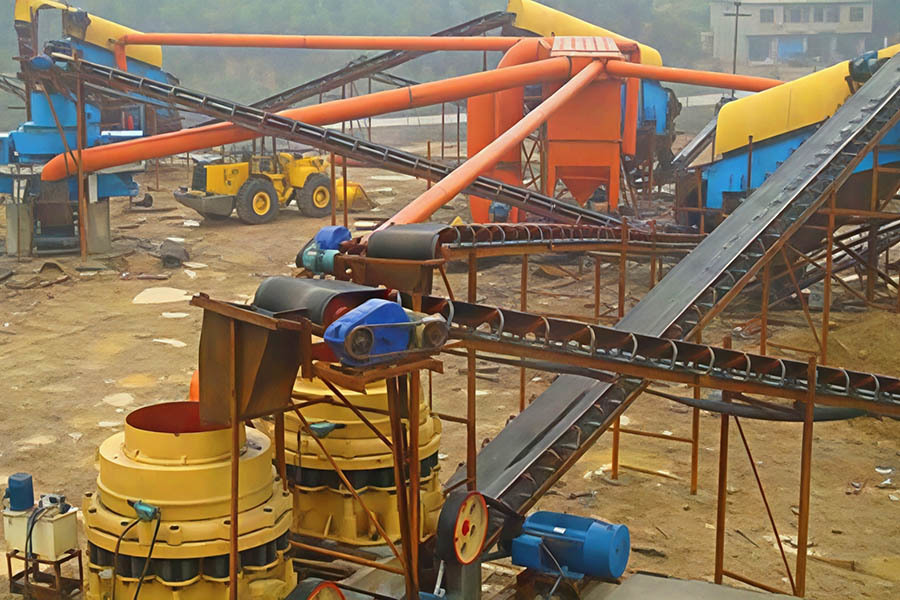
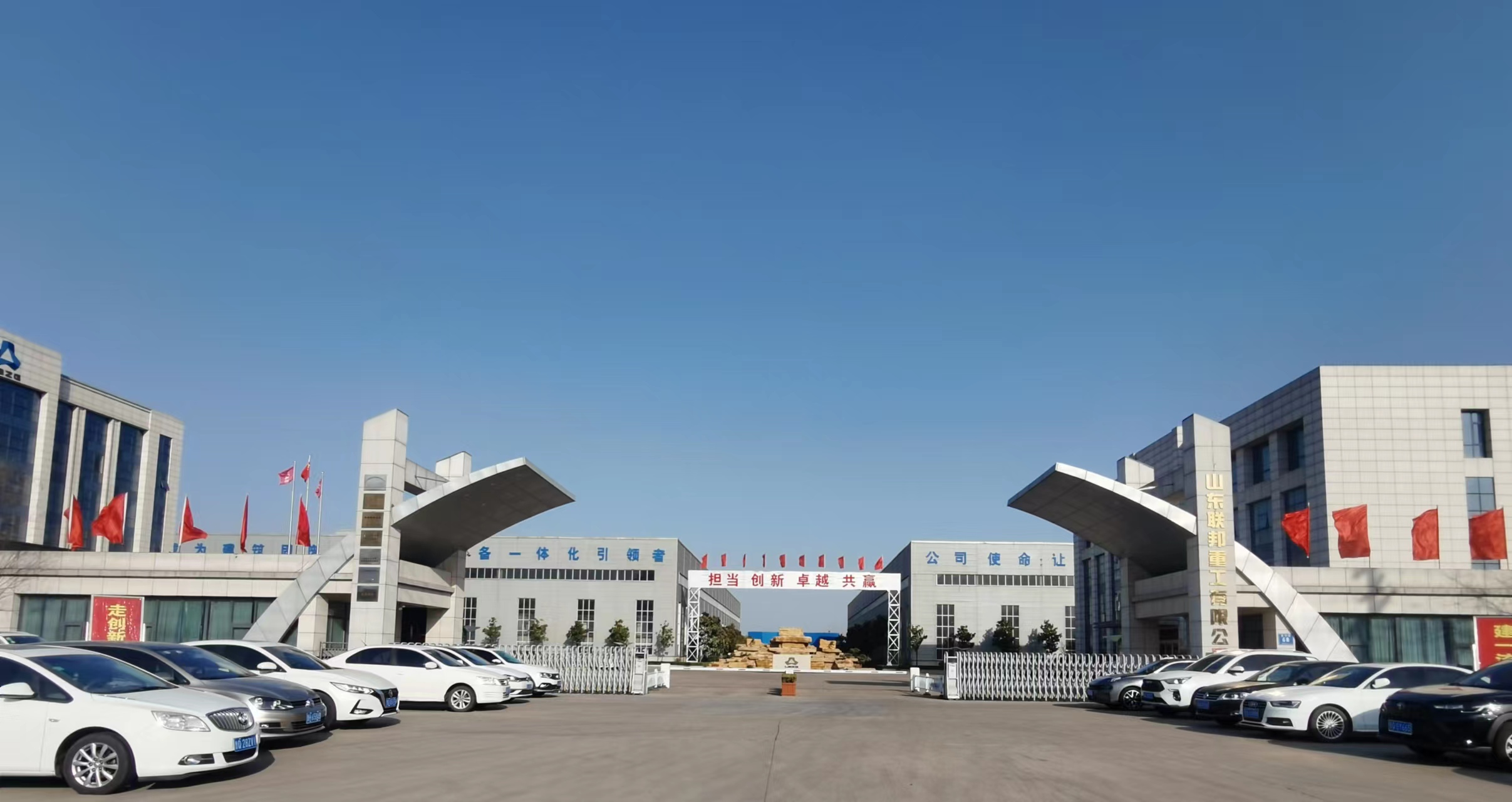
Shandong Lianbang Heavy Industry Co., Ltd. is a crushing and sand-making equipment manufacturer based in Linyi, Shandong Province, China, established in 2013, with technical origins traceable to Chengming Machinery, an affiliated enterprise established in 1996. Its brand trademark is Shanyuan LBZG. The company owns two production bases covering 120,000 m² in total, including 40,000 m² of standard workshops equipped with more than 150 sets of processing equipment, and it supplies standalone equipment as well as complete crushing, sand-making, solid-waste recycling, and mobile crushing and screening solutions. This article examines how aggregate plants position the XS, FG, YK and 2PG-Y units inside a production flow, and which site, feed and product factors decide each placement.
What an Aggregate Plant Crushing Line Is Supposed to Deliver
An aggregate plant crushing line takes run-of-quarry rock and converts it into saleable, size-graded fractions. The deliverable is not "crushed stone" as a single output — it is a set of overlapping products, typically coarse aggregate, mid-size aggregate, and a sand fraction, each with its own size band, cleanliness limit and particle-shape expectation. Every equipment decision in the line exists to protect one of those three outputs.
That is why the four units in this article's title are rarely a package deal. They answer different product requirements:
- YK circular vibrating screen — creates the size fractions themselves. Without grading, the line produces one mixed pile.
- XS wheel bucket sand washer — removes dust and light silt from the sand fraction using relatively little water, while keeping fine sand in the product.
- FG spiral sand washer — scrubs and dewaters sticky, high-clay sand that a wheel washer cannot clean effectively.
- 2PG-Y hydraulic two-roll roller crusher — reduces material by compression so the discharge stays inside a tight size window with limited over-crushing.
The Problem: Equipment Lists Written Before the Site and the Feed Are Known
Most aggregate line problems that surface after commissioning trace back to a decision made before the design stage — the equipment list was assembled from a template rather than from the actual feed and product requirement. Three failure patterns recur.
First, washing is specified when only dust removal is needed. A plant running low-clay crushed rock frequently buys a heavy scrubbing washer because "washing equipment" appeared on a reference list. The result is unnecessary water consumption, additional fine-sand loss, and a dewatering load the site's water balance was never sized for. When the sand fraction carries only stone dust rather than clay, a wheel-type washer does the job with far less water.
Second, the crusher type is chosen by habit rather than by the product size window. Impact and hammer crushers deliver high reduction ratios and good cubical shape, and they are the right answer for most construction aggregate. But when the requirement is a narrow finished band with strict limits on undersize generation — cement-plant feed, refractory material, certain coal applications — compression crushing in a roller crusher holds the size window far more tightly.
Third, more screen layers are assumed to be better. Layer count sets how many fractions a single screen can discharge, but it also adds deck mass, drive load and maintenance surface. A 4YK-1548 (4 layers, 7.5 kW, 5.2 t) and a 2YK-1854 (2 layers, 11 kW, 5.5 t) occupy different points on that trade-off, and neither is universally superior.
Design rule: fix the feed characterization and the finished-fraction specification first. Only then assign YK, XS, FG and 2PG-Y roles. Reversing that order is the single most common source of rework in aggregate plant projects.
Industry Background: Why Line Design Is Getting More Attention
Aggregate crushing is a large and internationally traded equipment category, which means buyers have more options and more reason to compare designs carefully. The global stone crushing equipment market was estimated at USD 8.47 billion in 2024, according to Market Research Future. Within that market, primary crushing remains the dominant equipment type: jaw crushers held a 35.2% share in 2025, reflecting their near-universal use at the head of crushing circuits (Polaris Market Research).
The demand side is equally substantial. The United States produced 1.5 billion tons of crushed stone in 2023, valued at over USD 24 billion (USGS data cited by Research Nester). On the supply side, China was the leading exporter of machines to crush or grind stone, ores and minerals in 2024, with exports valued at USD 1.38 billion (Observatory of Economic Complexity). For overseas buyers — particularly in the Middle East, Central Asia, Southeast Asia and Africa — that export base means equipment can be sourced at competitive cost, but it also means the burden of process verification sits with the buyer. A line assembled without a clear role definition for each unit is a line that will underperform regardless of where the machines were manufactured.
Regulatory pressure is also shaping design choices. China's mandatory energy efficiency standards revision scheduled for 2026 adds standby power limits to industrial machinery, a direction that favors correctly sized drives over oversized ones. Separately, ISO 21873-2:2019 specifies safety requirements and verification for mobile crushers used to crush rock or reprocess construction materials — relevant when a plant uses mobile units alongside a fixed line.
The Four Units and Where Each One Belongs
YK Circular Vibrating Screen — the Grading Backbone
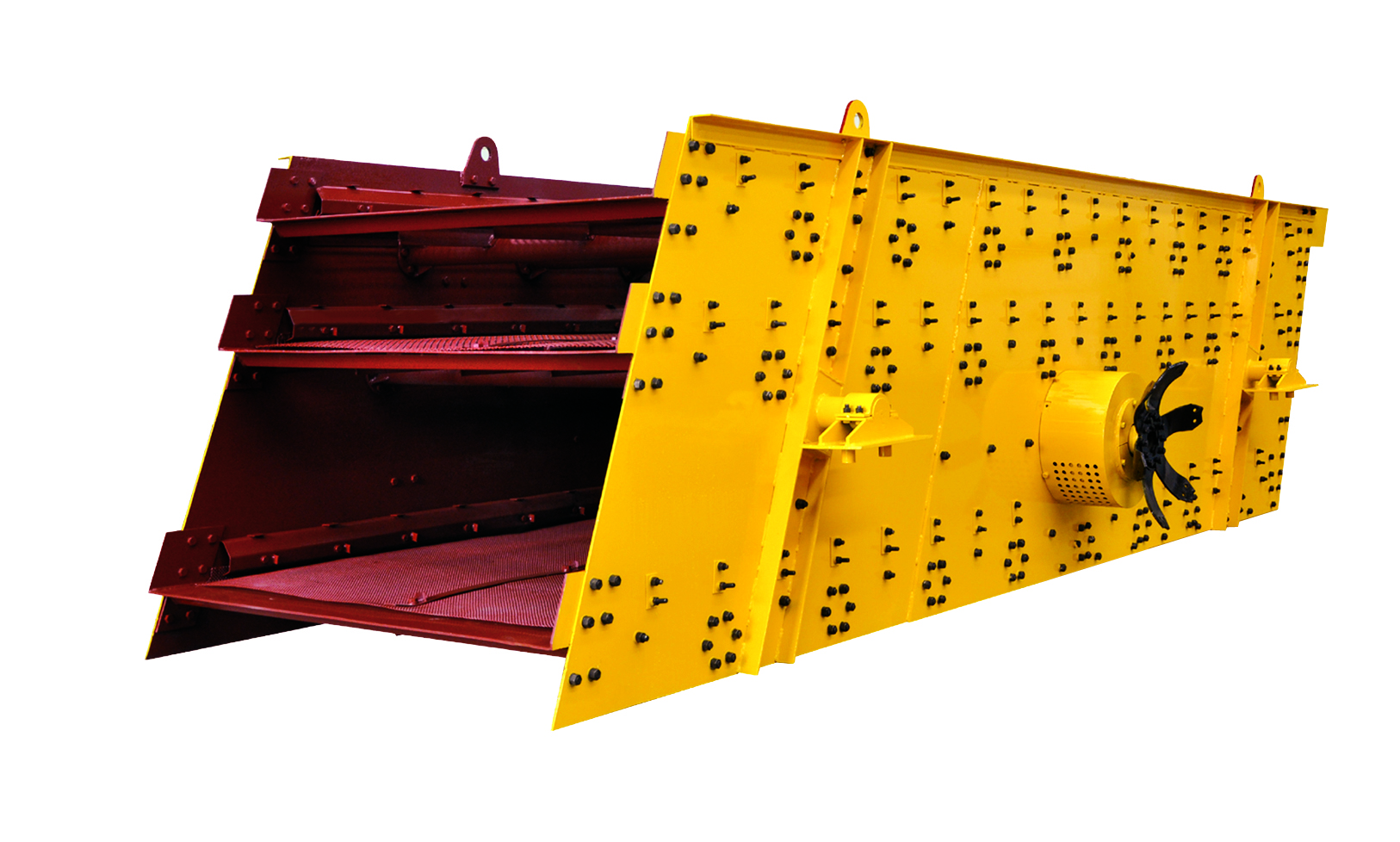
The YK screen is the unit that turns crushed rock into saleable products. It is a circular-motion vibrating screen with a carbon steel frame and manganese steel screen mesh, intended for aggregate grading and medium-fine material screening in stone plants, mining operations and quarries. Screen aperture in the LBZG YK range is below 50 mm, and throughput spans 15–200 t/h depending on model.
Layer count is the primary selection variable, because it determines how many fractions a single machine discharges:
- 2-layer: for lines producing two finished fractions, for example 2YK-1248 (5.5 kW, 3.6 t) through 2YK-2470 (22 kW, 8.5 t).
- 3-layer: the common choice for aggregate plants producing coarse, mid and fine fractions simultaneously, for example 3YK-1548 (7.5 kW, 4.8 t) or 3YK-2160 (15 kW, 7.5 t).
- 4-layer: for plants needing four cuts from one deck stack, for example 4YK-1548 (7.5 kW, 5.2 t) or 4YK-2160 (15 kW, 7.9 t).
Screen width increases with throughput: the 1248 and 1548 series suit smaller and mid-size plants, while the 2160 and 2470 series carry the larger tonnages. In a typical multi-stage line, a secondary screen sits after the secondary crusher and returns oversize to the crusher, while the final screen classifies into product bins.
XS Wheel Bucket Sand Washer — Dust Removal with Low Water Use
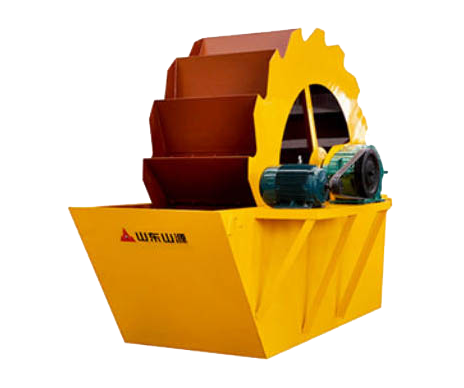
The XS sand washer is a wheel bucket type unit that removes mud and dust from the sand fraction in stone and sand plants. Its defining characteristic is restraint: because material is lifted and tumbled by a rotating bucket wheel rather than scrubbed in a long trough, water consumption is low and fine-sand loss is limited. The frame is carbon steel and the bucket liner is polyurethane, which resists abrasion from the sand slurry.
The LBZG XS range covers four models, all running at an impeller rotation speed of 0.8–1.2 r/min:
- XS-2600 — wheel bucket diameter 2600 mm; 20–50 t/h; 5.5 kW motor; total weight 2.4 t.
- XS-2800 — wheel bucket diameter 2800 mm; 30–80 t/h; 7.5 kW motor; total weight 3 t.
- XS-3000 — wheel bucket diameter 3000 mm; 50–100 t/h; 11 kW motor; total weight 5.2 t.
- XS-3200 — wheel bucket diameter 3200 mm; 80–150 t/h; 15 kW motor; total weight 7.2 t.
The bucket diameter, not the motor, is the practical sizing variable: it sets how much material the wheel can lift per revolution. A plant producing 60 t/h of sand fraction would look at XS-3000 rather than XS-2600, even though the smaller unit's motor would be adequate from a power standpoint.
FG Spiral Sand Washer — Scrubbing for High-Clay Feed
The FG spiral sand washer is selected when the sand fraction arrives sticky. Material travels the length of a water-filled trough while a rotating spiral screw scrubs it, dissolves or suspends clay, and pushes the cleaned sand up the inclined discharge end for dewatering. Because the residence time is longer and the agitation is more vigorous than in a wheel washer, the FG unit handles clay content that a wheel washer will pass through only partially cleaned. The trade-off is higher water consumption and somewhat greater fine-sand loss.
The FG range covers four models, all designed for fine material washing, grading and dewatering in sand and gravel plants, with a maximum feed size below 10 mm:
- FG-500 — spiral diameter 508 mm; tank length 6700 mm; capacity 20 t/h; motor 3–5.5 kW; water consumption 5–10 t/h; weight 3.57 t.
- FG-750 — spiral diameter 762 mm; tank length 7220 mm; capacity 40–50 t/h; motor 7.5 kW; water consumption 6–60 t/h; weight 5.23 t.
- FG-1000 — spiral diameter 1000 mm; tank length 7620 mm; capacity 50–70 t/h; motor 11 kW; water consumption 9–80 t/h; weight 8.27 t.
- FG-1200 — spiral diameter 1200 mm; tank length 7620 mm; capacity 70–110 t/h; motor 15 kW; water consumption 10–80 t/h; weight 11.11 t.
Note the water consumption bands. The FG-1200 can draw up to 80 t/h of water, which is a site-level constraint rather than an equipment-level one. Plants in arid regions frequently find that the water balance, not the washer itself, decides whether an FG or an XS unit is feasible.
2PG-Y Hydraulic Two-Roll Roller Crusher — Size Control with Limited Fines
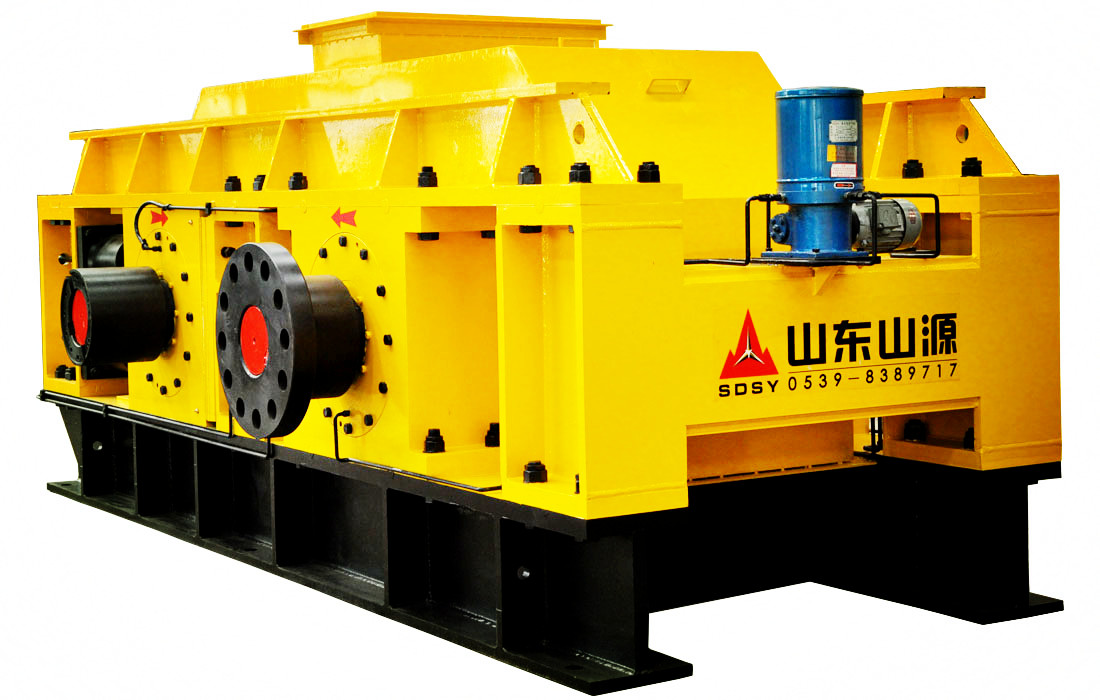
The 2PG-Y is a hydraulic two-roll roller crusher. Two counter-rotating rolls — a cast steel roll body with an alloy steel roll skin — draw material into the gap between them and reduce it by compression. Because the discharge opening is a fixed physical gap, the product stays inside a predictable size window and over-crushing is limited. That behavior is the reason roller crushers remain in service in cement, metallurgy, building material, refractory material and coal crushing circuits, where undersize generation is a cost rather than a benefit.
The largest model in the LBZG 2PG-Y range, the 2PG-1000, has a roll diameter of 1000 mm and a roll length of 950 mm, a capacity band of 2–18 t/h, two 37 kW motors, and a unit weight of 18 t per roll assembly. The 2PG-600 is positioned as a mid-duty roller crusher for medium-size crushing plants, and the 2PG-400 is a smaller hydraulic two-roll unit for secondary and fine crushing of medium-hard materials in crushing production lines.
Two limits should be stated plainly. First, the 2PG-Y is not a high-throughput aggregate producer — the 2–18 t/h band for the 2PG-1000 places it in specialist duty, not in the main aggregate flow of a 300 t/h plant. Second, roll crushing does not improve particle shape the way impact crushing does. Where the buyer's specification prioritises cubical aggregate for concrete or asphalt, an impact or hammer crusher is normally the correct choice; the roller crusher earns its place when the size window is the controlling requirement.
Step-by-Step: Placing XS, FG, YK and 2PG-Y in the Process Flow
The following sequence reflects the order in which the design decisions actually constrain one another. Each step closes off options for the next.
Step 1 — Characterise the feed. Record rock type and compressive strength, maximum lump size, moisture content, and the clay or mud content of the sand fraction. Clay content is the single variable that most often decides between an XS and an FG washer, and lump size sets the primary crusher's feed opening. For reference, a PE-500×750 primary jaw crusher accepts feed up to 480 mm and delivers 20–80 t/h, while a PE-1200×1500 accepts up to 1000 mm and delivers 300–800 t/h.
Step 2 — Fix the finished-fraction specification. List every saleable product with its size band, allowable fines, and — where relevant — cleanliness limit. This list determines screen layer count and whether washing appears in the flow at all.
Step 3 — Place the sizing stage. Select the YK screen by the number of fractions required and the tonnage. A plant producing three aggregate fractions plus a sand fraction will typically use a 3-layer or 4-layer machine, with screen width matched to line capacity.
Step 4 — Decide whether the sand fraction is washed, and by which unit. If the sand fraction is low in clay and the requirement is dust removal, specify an XS wheel bucket washer sized by bucket diameter against sand-fraction tonnage. If the sand fraction is sticky and high in clay, specify an FG spiral washer and confirm the site's water supply against the model's water consumption band.
Step 5 — Decide whether a roller crusher belongs in the flow. If the product specification is a narrow band with strict undersize limits, the 2PG-Y belongs in a secondary or fine crushing position. If the product is construction aggregate judged on shape and grading, use impact, hammer or cone crushing instead.
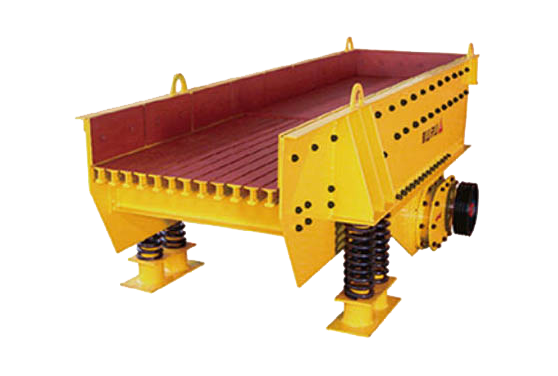
Step 6 — Match feeding and conveying capacity to the crushing and screening stages. A feeder that is too small starves the crusher; a conveyor that is too narrow spills. The ZSW-590×110 vibrating feeder has a 5900 × 1100 mm trough and a 160–350 t/h capacity band, and the ZSW-490×110 covers 80–220 t/h. On the discharge side, the B650 belt conveyor carries 80–200 t/h, B800 carries 280–500 t/h, B1000 carries 430–850 t/h, and the heavy-duty B1200 carries 650–1200 t/h.
Step 7 — Validate against site conditions. Confirm the local power supply against installed drive power, confirm the water balance if washing is included, confirm that the layout has room for the screen's maintenance access, and confirm the climate envelope. Overseas quarry and infrastructure projects in tropical, arid or high-altitude locations commonly require voltage adaptation across 380V, 440V, 415V or 660V, and multilingual documentation for the operating team.
Use Cases: Three Aggregate Plant Scenarios
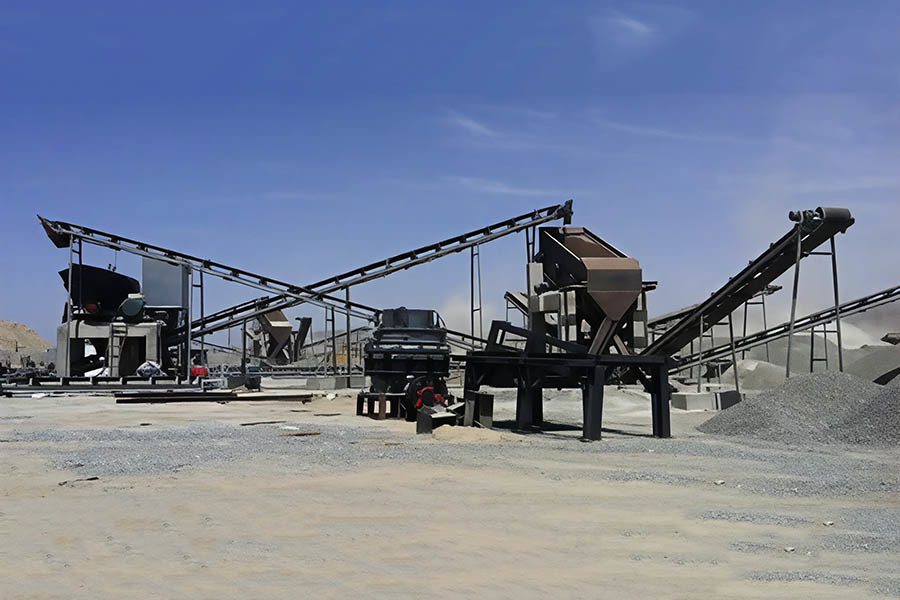
Scenario 1 — Hard rock aggregate plant, low-clay feed, restricted water. Crushed granite or basalt is screened into three aggregate fractions plus a manufactured sand fraction. Because the sand carries mostly stone dust, an XS wheel bucket washer is sufficient; the FG unit's water demand would strain the site's supply. Sizing follows bucket diameter against the sand-fraction tonnage, with a YK screen upstream splitting the flows. This is the configuration pattern used in highway and railway aggregate supply, where gradation and particle shape requirements are strict and continuous production is expected.
Scenario 2 — Manufactured sand line with sticky, high-clay feed. Weathered sand or river pebble feed carries enough clay that a wheel washer leaves the product out of specification. Here an FG spiral washer becomes the correct unit, with the model selected against the water consumption band as much as against capacity. A 3-layer YK screen handles the upstream grading duty, and a rod mill can be configured as the grinding stage where the sand plant processes quartz sand, weathered sand or river pebble. New town, airport and municipal concrete projects are typical demand sources for this product, because airport-grade and municipal concrete aggregate specifications leave little tolerance for residual clay.
Scenario 3 — Specialty line with a tight product size window. Where the customer is a cement plant, a refractory material producer, or a coal processing operation, the controlling requirement is discharge size predictability and limited fines. A 2PG-Y roller crusher is placed in the secondary or fine crushing position for this duty. Throughput is modest by aggregate standards — the 2PG-1000 spans 2–18 t/h — so this unit is normally a dedicated circuit rather than a stage in a large aggregate flow.
Comparison Table: XS, FG, YK and 2PG-Y at a Glance
| Unit | Primary job in the line | Representative models | Where it sits | Selection trigger |
|---|---|---|---|---|
| YK circular vibrating screen | Sizing and grading into finished fractions | 2YK-1248, 3YK-1854, 4YK-2160 (aperture <50 mm; 15–200 t/h) | After secondary and tertiary crushing | More than one saleable fraction is required |
| XS wheel bucket sand washer | Dust and light-silt removal with low water use and low fine-sand loss | XS-2600 (20–50 t/h) to XS-3200 (80–150 t/h) | On the sand fraction, after screening | Sand fraction is low in clay; water supply is limited |
| FG spiral sand washer | Scrubbing, grading and dewatering of sticky feed | FG-500 (20 t/h) to FG-1200 (70–110 t/h) | On the sand fraction, after screening | Sand fraction is high in clay; water consumption band acceptable for the site |
| 2PG-Y roller crusher | Controlled-size reduction with limited over-crushing | 2PG-400, 2PG-600, 2PG-1000 (2–18 t/h) | Secondary or fine crushing position, dedicated circuit | Finished size window is tight and undersize generation must be limited |
Read across the table rather than down it. A plant that requires three aggregate fractions and a clean, low-clay sand fraction needs the YK row plus the XS row and nothing from the FG or 2PG-Y rows. A sticky-feed manufactured sand plant needs the YK row plus the FG row. A cement-feed circuit needs the 2PG-Y row and possibly no washing at all. The value of the table is in the fourth column: it shows that the units occupy different positions, so adding one does not substitute for another.
Frequently Asked Questions
What equipment does a stone crushing production line for aggregate plants typically include?
A fixed aggregate line normally combines a vibrating feeder such as the ZSW-490×110 (80–220 t/h) or ZSW-590×110 (160–350 t/h), a primary jaw crusher, a secondary crusher, one or more YK circular vibrating screens, and belt conveyors ranging from B650 (80–200 t/h) to the heavy-duty B1200 (650–1200 t/h). Optional units are added by product requirement: an XS wheel bucket sand washer or an FG spiral sand washer when the sand fraction needs washing, and a 2PG-Y hydraulic two-roll roller crusher when the finished size window must be tightly controlled with limited fines.
Where does the YK screen sit in the process flow, and how many layers should I choose?
The YK circular vibrating screen sits after the crushing stages, where it splits crushed material into finished fractions. LBZG YK models use screen apertures below 50 mm with a throughput band of 15–200 t/h, and the layer count decides how many fractions one machine can discharge. A 2-layer unit such as the 2YK-1854 (11 kW, 5.5 t) suits lines producing two fractions; a 3-layer unit such as the 3YK-1548 (7.5 kW, 4.8 t) suits plants producing coarse, mid and fine aggregate simultaneously; a 4-layer unit such as the 4YK-2160 (15 kW, 7.9 t) is used where four cuts are needed from one deck stack.
When should a 2PG-Y roller crusher be used instead of an impact or hammer crusher?
The 2PG-Y hydraulic two-roll roller crusher is a compression unit that produces a predictable discharge range with limited over-crushing. The 2PG-1000 has a roll diameter of 1000 mm, a roll length of 950 mm, a capacity band of 2–18 t/h, two 37 kW motors, and an 18 t weight per roll assembly. It is intended for cement, metallurgy, building material, refractory material and coal crushing, where the product must stay inside a tight size window. Where the product is construction aggregate judged on particle shape and grading rather than on size-window precision, an impact or hammer crusher is normally the better fit.
Should I choose an XS wheel bucket washer or an FG spiral washer?
The two are not interchangeable. XS wheel bucket washers are selected for low-clay feed where the job is dust removal with restrained water use and low fine-sand loss; the range runs from XS-2600 (2600 mm wheel bucket diameter, 20–50 t/h, 5.5 kW) to XS-3200 (3200 mm, 80–150 t/h, 15 kW). FG spiral washers are selected for high-clay, sticky feed that requires scrubbing and dewatering rather than dust removal; the range runs from FG-500 (508 mm spiral diameter, 20 t/h, water consumption 5–10 t/h) to FG-1200 (1200 mm spiral diameter, 70–110 t/h, water consumption 10–80 t/h). Confirm the site's water balance before specifying an FG unit, because its upper water consumption band can be the deciding constraint.
How do I obtain a matched equipment list and process layout for my site?
Provide five inputs: the feed rock type and maximum lump size; the target finished fractions and required throughput; the clay or mud content of the sand fraction; the maximum feed size the primary crusher must accept; and the site's power supply and water availability. With those inputs, LBZG's engineering team can return a matched equipment list and process layout covering feeding, crushing, screening, optional washing, and conveying. Shandong Lianbang Heavy Industry Co., Ltd. operates two production bases in Linyi, Shandong Province with 120,000 m² of total area and more than 150 sets of processing equipment, and holds ISO9001 quality management, ISO14001 environmental management, OHSAS18001 occupational health and safety system certifications, plus CE export certification for foreign trade projects. A full product brochure is available for download at the company brochure link.
Conclusion
Placing XS, FG, YK and 2PG-Y units inside a stone crushing production line for aggregate plants is a sequence of product-driven decisions, not a template selection. The YK circular vibrating screen defines the finished fractions and therefore sits in almost every line. The XS and FG sand washers are alternatives, not partners: XS where clay is low and water is scarce, FG where clay is high and scrubbing is unavoidable. The 2PG-Y roller crusher is a specialist compression unit that earns its place only when the finished size window is the controlling specification.
Three inputs settle the design before any model number is chosen: site conditions, feed characteristics, and final product requirements. Feed rock type and lump size set the crushing stages; clay content and water availability decide the washing question; the finished-fraction list decides screen layer count and width. Getting those three inputs documented up front removes most of the rework risk in an aggregate plant project.
Next Step
If you are planning an aggregate or manufactured sand project, send your feed rock type, target fractions, throughput requirement and site conditions to the LBZG engineering team. You will receive a matched equipment list and process layout covering feeding, crushing, screening, washing and conveying.
Email: lbzg@lbcrusher.com | Website: www.sypsj.cn | WhatsApp: +86 139 5388 7097
Have Questions or Need More Details?
Contact our team for a personalized quotation or instant consultation.
Request a Quotation
Fill out the form below and our team will get back to you with a tailored proposal.
WhatsApp Direct Chat
Prefer to chat in real-time? Message us on WhatsApp for instant assistance & quick answers.
- Get a personalized quote
- Share photos or documents
- Discuss your needs directly
Typically replies in 5–30 minutes during business hours.