
YK Screen vs XS and FG Washers: Sizing or Washing in a Stone Crushing Production Line
A stone crushing production line does two separate jobs at its finish end. It cuts rock into the size fractions a customer ordered, and it removes what the customer did not order — mud, clay and dust. In the LBZG range, the YK Screen does the first job: classification by particle size. The XS Sand Washer and the FG Spiral Sand Washer do the second: washing sand and fine material until it is clean enough for the specification it is sold against.
Because both jobs happen after crushing and both discharge onto product conveyors, many buyers treat them as one choice. They are not one choice. Gradation is a sizing problem; cleanliness is a washing problem. The decision rules are short:
- Right size, dirty product → you need washing equipment (XS Sand Washer or FG Spiral Sand Washer).
- Clean enough, mixed or out-of-spec sizes → you need sizing equipment (YK Screen).
- Both out of spec → screening first, washing second, and washing only the fraction that actually needs it.
This guide explains what each machine does, where it belongs in the flow, and how to work out which stage your own line is missing.
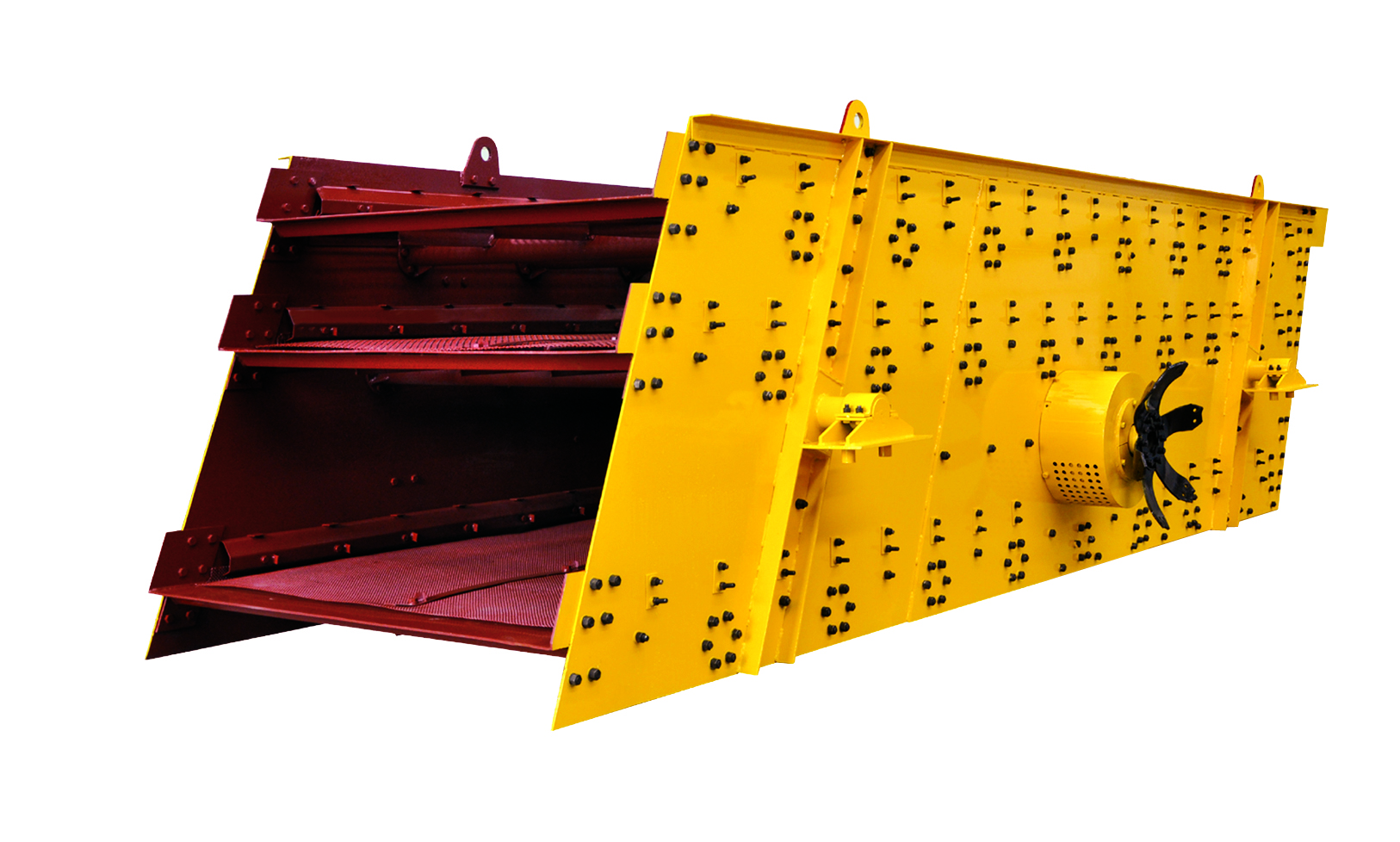
YK Screen: the sizing and classification stage of a stone crushing production line.
Problem definition: sizing and washing fix two different failures
Feed quality and product specification are two different things, and the machine that fixes one rarely fixes the other. A YK Screen can only divide what arrives by particle size. A washer can only reduce what is clinging to the particles. Neither substitutes for the other, which is why “sizing or washing” is a genuine purchasing decision and not a matter of wording in a proposal.
Most mis-buys begin with a symptom that has been misread. “The sand is not clean” sounds like a washing problem, but if the screen mesh is worn, blinded or badly tensioned, fines and mud stay locked in the coarse fraction, and no washer placed downstream will repair the gradation. The opposite mistake is just as common: a producer adds screening capacity to chase a cleanliness specification that only water can deliver.
Read the symptom against the stage:
- Oversize lumps or missing intermediate fractions → screening configuration and mesh, not washing.
- Excess dust in the fine product → washing, not an extra deck.
- Clay or mud coating on aggregate surfaces → washing; a screen cannot scrub a surface.
- Screen blinding on wet, sticky feed → a feed and screening-setup issue; the screen still has to work before any washer can help.
- Useful fine sand leaving the plant with the wash water → washer type selection (wheel versus spiral) and the water circuit, not screening.
A useful framing: screening is a dry separation duty and washing is a wet beneficiation duty. They consume different resources — a screen consumes wear parts, a washer consumes water — so the wrong choice shows up in operating cost, not only in product quality.
Industry background: tighter specifications, and a finish end that is increasingly wet
The global stone crushing equipment market was estimated at USD 8.47 billion in 2024 (Market Research Future). Equipment spending is only the upstream signal; the downstream signal is volume. The United States produced 1.5 billion tons of crushed stone in 2023, valued at over USD 24 billion (USGS figures reported through Research Nester). Aggregate at that scale is bought and rejected against written gradation and cleanliness requirements, not against appearance.
That is why lines that were designed dry are increasingly finished wet. Concrete, asphalt, railway ballast and high-grade mortar all specify what the material may contain, and two of those requirements — the size distribution and the mud and dust content — are handled by two different machines. A line that owns only one of them will fail at least one requirement.
LBZG (Shandong Lianbang Heavy Industry Co., Ltd, brand Shanyuan LBZG) manufactures both ends of that split, so the sizing-versus-washing question can be answered inside one equipment scope instead of being negotiated between two suppliers.
What each machine actually does
YK Screen: classification by particle size
The YK Screen is a circular vibrating screen used for aggregate grading and for screening medium and fine material in stone plants, mining and quarry operations. It separates a mixed crushed product into fractions by passing material over manganese steel screen mesh mounted in a carbon steel frame. Multi-deck configurations — two, three or four decks — allow several fractions to be produced in one pass, and oversize material is normally returned to the crusher in a closed circuit.
What it changes is particle size distribution, and nothing else. What it does not do is remove clay, scrub mud off stone surfaces or reduce dust content; those are simply not functions of a screen. Its practical limit is wet, sticky feed: high material moisture, clogged or worn mesh, altered excitation force and ageing springs are the recognised reasons a YK Screen loses screening performance, and none of them is solved by adding a washer.
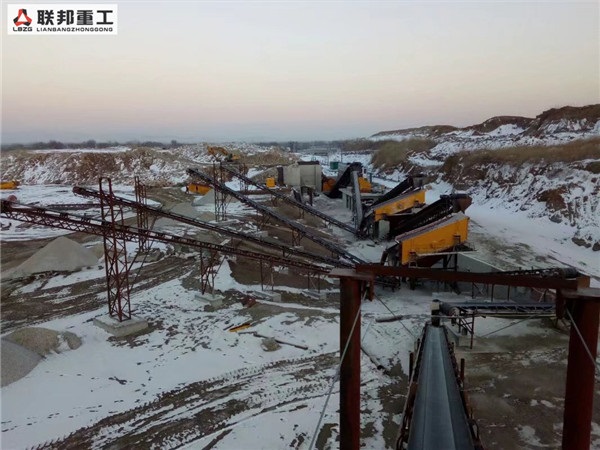
Screening sits between the crushers and the product stockpiles: it sets gradation before any wet stage is considered.
XS Sand Washer: washing sand with low water use and low fine-sand loss
The XS Sand Washer is a wheel bucket sand washer used for sand washing and for mud and dust removal in stone and sand plants. Material is tumbled in a water bath by the rotating bucket wheel, clay and dust dissolve or stay in suspension, and the washed sand is lifted out and dewatered. Its construction is deliberately simple — a carbon steel frame with a polyurethane bucket liner — and its characteristic behaviour in service is low water consumption with low loss of fine sand.
What it changes is cleanliness. Where it performs best is sand with a low clay content that mainly needs dust removal, and sites where water supply or water treatment capacity is a constraint.
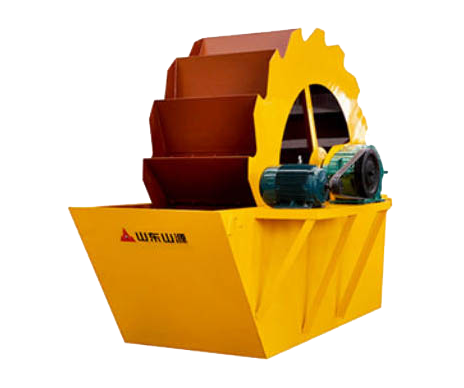
The washing stage handles the one quality attribute a screen cannot touch: mud and dust content.
FG Spiral Sand Washer: scrubbing, grading and dewatering fine material
The FG Spiral Sand Washer is a screw-type machine used for fine material washing, grading and dewatering in sand and gravel plants. The screw conveys material through a water tank, and because the material is scrubbed and agitated along the whole tank length, the FG type has stronger scrubbing power than a wheel washer and handles sticky, high-clay feed that a bucket wheel would struggle to clean thoroughly. The trade-off is real: spiral washers consume more water and lose more fine sand than wheel-type washers, and their wear surfaces are lined with wear-resistant rubber and polyurethane to survive an abrasive fine fraction.
What it changes is cleanliness, plus the dewatering and light grading of the fine product. What it is not is a substitute for a screen when the problem is gradation.
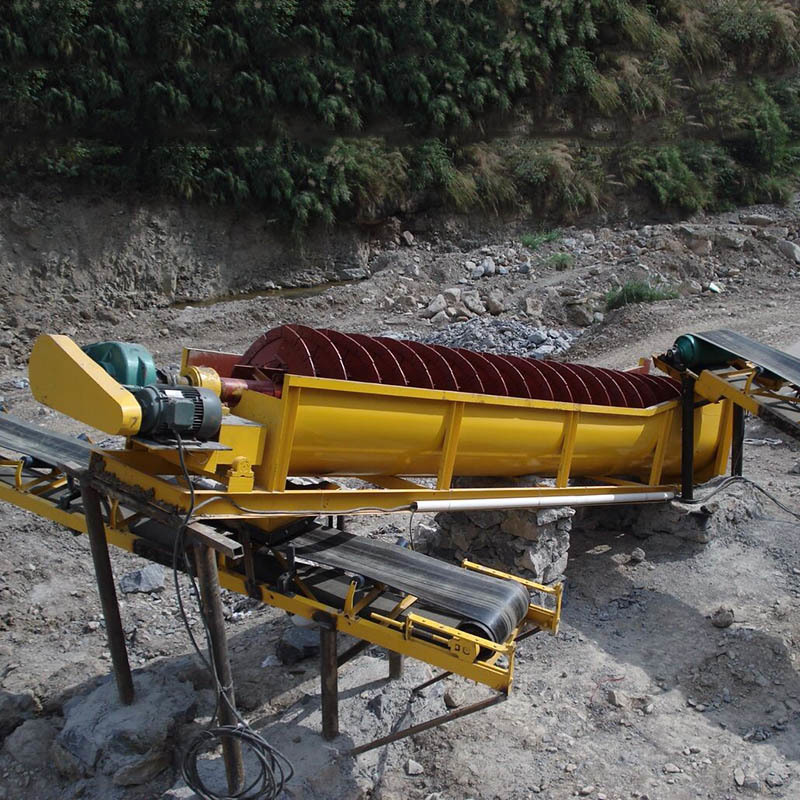
FG Spiral Sand Washer: scrubbing power for sticky, high-clay fine material, with washing and dewatering in one unit.
How the three work together in one line
Screening and washing are sequential, not alternative. The YK Screen first produces the fractions the market buys; washing is then applied to the fraction whose cleanliness specification is not met — normally the sand and fine aggregate. In practice, washing a classified fraction rather than the entire mixed feed keeps the water demand and the fine-sand loss inside one stream, which is also why the washer type matters as much as the decision to wash at all.
The commercial logic is clearest at the fine end. When the final product goes into concrete, asphalt or high-grade mortar and the specification limits mud content, a washer has to be installed, because no screening arrangement can reduce mud content. For low-clay material that mainly needs dust removal, the XS wheel washer is the lower-water, lower-fine-loss option. For high-clay, sticky material that must be scrubbed, the FG spiral washer is the type built for the job.
Step-by-step: how to decide which stage your line needs
- Write the requirement in two lines, not one. List the fractions you must produce (the gradation) and the cleanliness limit you must meet (mud and dust content). If a buyer only says “clean aggregate”, ask what maximum mud or dust content will be accepted — that single answer decides whether a washer is in scope.
- Test the feed, not the brochure. Clay content, moisture and stickiness of the pit material determine whether washing is needed at all, and whether a wheel or a spiral washer is the right type.
- Classify the problem. Out of gradation → YK Screen. Correctly sized but dirty → washing. Both wrong → YK Screen first, washer second.
- Configure the screening stage. Set the number of decks and the mesh apertures from the fractions you must sell, and decide whether oversize returns to the crusher in closed circuit or is stockpiled separately.
- Choose the washing type on clay content, not on price. Low-clay, dust-dominated sand → XS Sand Washer. High-clay, sticky material needing scrubbing → FG Spiral Sand Washer.
- Plan the water and fines circuit before you order. A washer is only as good as the water it receives and the settling arrangement behind it; fine-sand loss is a circuit decision as much as a machine decision.
- Agree the acceptance path. Confirm that the supplier commits to a pre-shipment factory test followed by on-site installation and commissioning, so both the sizing and the washing stages are proven on your own feed.
Comparison table: YK Screen, XS Sand Washer and FG Spiral Sand Washer
| Decision dimension | YK Screen (circular vibrating screen) | XS Sand Washer (wheel bucket) | FG Spiral Sand Washer (screw type) |
|---|---|---|---|
| Primary duty | Classification and sizing of aggregate | Washing — mud and dust removal from sand | Washing with strong scrubbing, plus grading and dewatering of fine material |
| Position in the line | After crushing, before product stockpiles; oversize returns to the crusher | After screening, on the fraction that must be clean | After screening, on fine material that needs heavy scrubbing |
| What it changes in the product | Particle size distribution only | Cleanliness of sand | Cleanliness, plus dewatering and light grading of fines |
| Feed it is built for | Aggregate grading and medium-fine screening in stone plant, mining and quarry work | Sand washing where clay content is low and dust is the main contaminant | Fine, high-clay, sticky material |
| Water requirement | None | Low water consumption | Higher water consumption than the wheel type |
| Behaviour with fine material | Mesh can clog or blind on wet, sticky feed; worn mesh, changed excitation force and ageing springs reduce screening performance | Low fine-sand loss | More fine-sand loss than the wheel type |
| Construction and wear surfaces | Carbon steel frame with manganese steel screen mesh | Carbon steel frame with polyurethane bucket liner; simple structure | Carbon steel frame with wear-resistant rubber liner and polyurethane lining |
| Choose it when | Gradation is out of specification, several fractions must be produced in one pass, or the process is dry | Sizes are acceptable but the sand is dusty, and water use and fine-sand retention matter | Sizes are acceptable but the material is sticky and clayey and must be scrubbed clean |
| Do not expect it to | Remove mud, scrub clay or reduce dust content | Scrub heavy clay, or control the gradation of coarse aggregate | Match wheel-type water efficiency, or eliminate fine-sand loss |
Use cases: where the sizing/washing split actually shows up
Concrete and asphalt aggregate lines
These lines carry both requirements at once. Screening produces the coarse and intermediate fractions; sand making and washing serve the fine end. In the China State Construction Engineering manufactured-sand application — a company reference project for ready-mix concrete supply — the line combines a YK Screen with an XS Sand Washer and a VSI sand maker, because gradation and cleanliness are two separate specifications on the same product.
Railway and highway aggregate supply
The Lunan High-Speed Railway aggregate supply project, where the line has run for years against railway ballast and concrete aggregate requirements, is the clearest example of a project that needs both stages: YK screens to hold stable grain-size control, and XS and FG washers where the fine product has to meet a cleanliness limit. When gradation and cleanliness are both contractual, buying only one of the two machine types guarantees a complaint.
Cement and building-materials aggregate
Sinoma Group and CNBM projects in the reference list run jaw, cone, hammer and roller crushers with YK screens and belt conveyors to produce cement-grade and construction aggregate. These are typically dry, gradation-led lines: screening is the quality stage, and washing appears only where the specification for the specific product demands it.
Construction and demolition waste recycling
Mobile crushing and screening stations processing demolition waste into recycled aggregate are a dry duty. Here the answer to “sizing or washing” is normally sizing plus dust suppression, not a washer: the constraint is mobility, noise and dust rather than mud content, and the finished recycled aggregate is graded, not washed.
Overseas quarry and Belt & Road projects
For overseas quarry development, LBZG supplies full equipment sets with spare parts kits and adapts electrical configuration to local voltage and climate conditions — which matters more once a washer is added, because a wet circuit also brings a local water-supply and water-treatment requirement that has to exist on site.
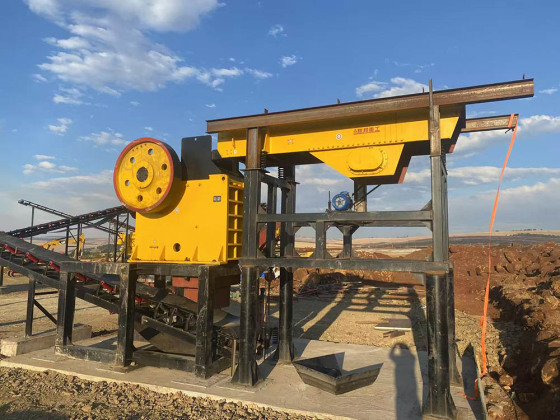
On-site line where sizing and washing duties are separated rather than mixed into one stage.
FAQ
How is a stone crushing production line with screening and washing accepted before delivery?
Acceptance follows two stages: a pre-shipment factory test, and then on-site installation and commissioning. The factory test is carried out before the equipment leaves the works, and commissioning takes place at the buyer’s site, so the screening and washing stages are proven on the customer’s own feed rather than only in the workshop. A buyer should confirm both stages in the contract, together with the English manuals and spare-parts lists that ship with the equipment.
Can one OEM manufacturer supply the YK Screen, the XS Sand Washer and the FG Spiral Sand Washer as part of a single line?
Yes. Shandong Lianbang Heavy Industry Co., Ltd (brand Shanyuan LBZG) provides OEM and ODM production services for stone crushing production lines, including private-label equipment supply and ODM design and production for customised crushing line configurations. Because the screening stage and both washer types sit inside one equipment scope, the sizing-versus-washing split can be decided together with line layout, capacity and output grading, and automation level, instead of being divided between two suppliers who each optimise only their own stage.
What is the minimum order quantity if I want to test the concept before committing to a full line?
The minimum order quantity is 1 set, or 1 unit. That MOQ covers pilot and test orders as well as trial and volume orders of crushing equipment and of stone crushing production line equipment, so a buyer can begin with a single machine — for example one YK Screen or one XS Sand Washer — and then extend to the complete line once the sizing or washing gap is confirmed.
How can I validate screening and washing performance on my own material before ordering the full line?
Start from the feed data rather than the catalogue. Customisation covers production line layout, capacity and output grading, automation level, and even quartz and sand production line layout, which means the configuration can be matched to the material you actually mine before the order is fixed. The one-set MOQ allows a single unit to be ordered as a trial, and because the acceptance procedure ends with on-site installation and commissioning, performance is confirmed on site with real feed rather than assumed from a datasheet.
What production capacity and lead time can an OEM manufacturer support for screening and washing equipment?
Monthly production capacity is approximately 170 sets for stone crushing production line orders. Standard lead time is 15–30 days, with urgent orders negotiable. If you want to check whether your line needs screening, washing or both, send the feed description and the finished-product requirement to lbzg@lbcrusher.com, or download the company brochure, and the layout, capacity and output grading can be proposed together with the sizing and washing split.
Conclusion: decide by specification, not by position in the flow
The YK Screen and the two washer types are not competing options in a stone crushing production line. They answer different questions. The YK Screen answers “is the product the right size?” and works dry, using manganese steel screen mesh to split aggregate into saleable fractions. The XS Sand Washer answers “is the product clean, with low water use and low fine-sand loss?” for low-clay, dust-dominated sand. The FG Spiral Sand Washer answers “can this sticky, high-clay material be scrubbed clean?” at the cost of more water and more fine-sand loss.
The practical rule is therefore simple. Fix gradation with screening before you consider washing; add washing only for the fraction that fails a cleanliness limit; and choose between the wheel and spiral washer on clay content, not on price. A line that follows that order buys one stage instead of two, and buys the right stage.
Next step: check the sizing/washing split against your own feed
Send your feed type, clay and moisture condition, and the finished-product requirement, and LBZG will confirm whether your stone crushing production line needs a YK Screen, an XS Sand Washer, an FG Spiral Sand Washer, or a combination of them — with layout, capacity and output grading proposed together.
Email: lbzg@lbcrusher.com | Tel / WhatsApp: +86 13953887097 | Website: www.sypsj.cn
Download the company brochure: Shandong Lianbang Heavy Industry brochure (PDF)
Screening and washing equipment for stone crushing production lines, manufactured at the LBZG works.
Have Questions or Need More Details?
Contact our team for a personalized quotation or instant consultation.
Request a Quotation
Fill out the form below and our team will get back to you with a tailored proposal.
WhatsApp Direct Chat
Prefer to chat in real-time? Message us on WhatsApp for instant assistance & quick answers.
- Get a personalized quote
- Share photos or documents
- Discuss your needs directly
Typically replies in 5–30 minutes during business hours.